This information is for educational purposes. Keyboard work involves small parts, soldering irons, and electronics — work in a ventilated space when soldering, unplug boards before opening them, and modding a board may void its warranty. When in doubt, check the manufacturer's documentation first.
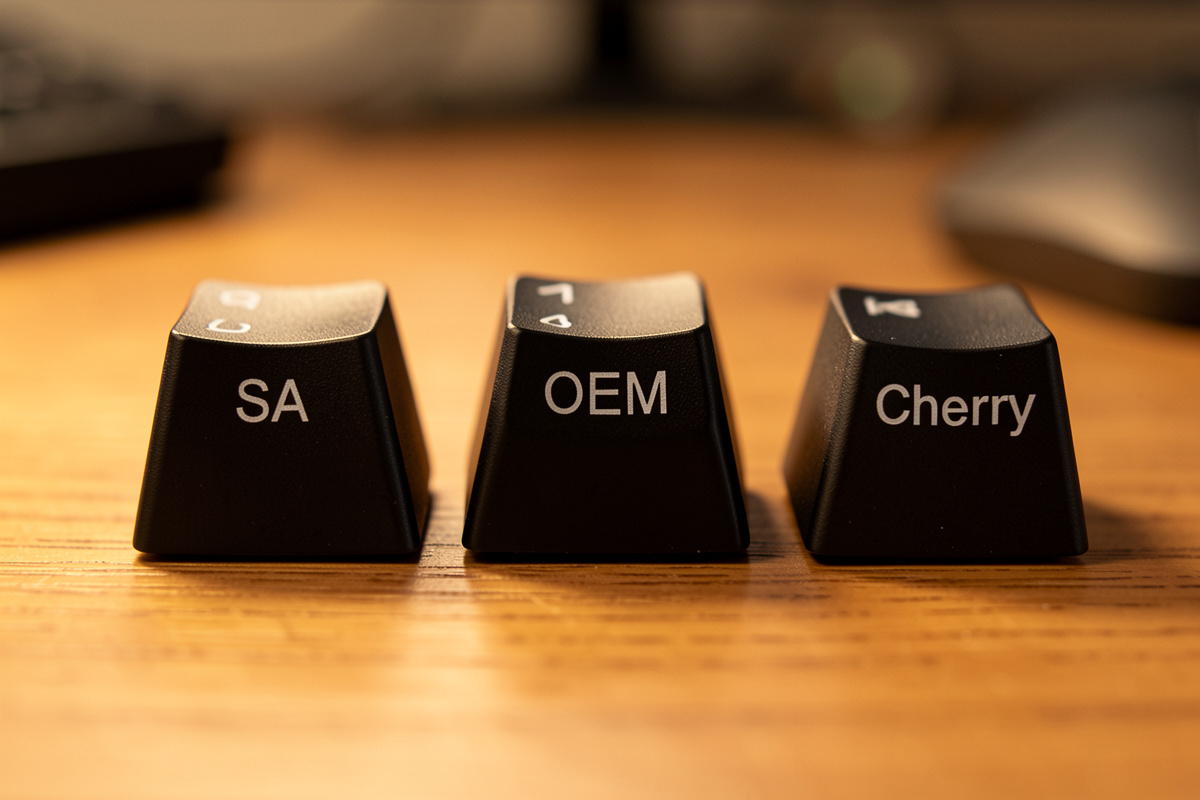
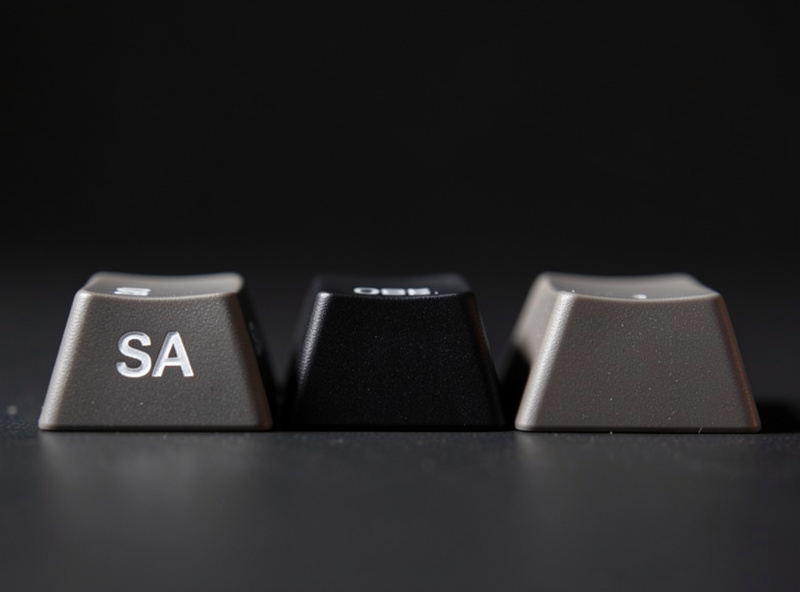
SA is the tall, loud, sculpted profile; OEM is the medium-height shape your stock board already wears; Cherry is the shorter, lower sculpted profile most of the hobby settles on. All three are sculpted — each row a different height — so the real choice is how tall you want the board to sit and how dramatic you want the sound. After weeks of typing each on the same board, my short answer is Cherry for daily comfort, OEM for familiarity, SA for character you commit to. The height spread is real: SA stands around 16.5mm at the front edge of the tall rows while Cherry sits closer to 9mm, and your wrists feel every millimeter of that difference over an eight-hour day.
I ran this comparison the only way that means anything: one board, one set of switches, the same recording setup, just the three profiles swapped in turn. That isolates the variable everyone else confounds when they compare a Cherry set on one board against an SA set on another and credit the profile for differences the board actually caused. Here is what changed and what stayed the same.
The Three Profiles at a Glance
Height is the headline difference: SA stands tallest, OEM sits in the middle, Cherry is the lowest of the three. That single dimension drives most of what your hands and ears notice. Taller caps mean more travel before your fingers reach the home position, a steeper typing angle, and more internal air volume that deepens and amplifies the sound. Lower caps sit closer to the plate, feel quicker, and read a touch crisper.
Sculpting also differs. OEM and Cherry have moderate row sculpting that guides your fingers without shouting about it; SA is aggressively scooped and dished, a profile you feel under every fingertip. None of them is uniform — if you want flat, that is DSA or XDA territory, a different conversation entirely. Within this trio, you are choosing degrees of tall and sculpted, not shape families.
| Profile | Height | Typing angle | Sound | Best for |
|---|---|---|---|---|
| SA | Very tall | Steep, retro | Deep, loud, resonant | Character and vintage feel |
| OEM | Medium | Moderate | Higher, slightly hollow | Stock-board familiarity |
| Cherry | Low | Shallow, fast | Lower, rounded, contained | The default daily driver |
OEM: The Profile You Already Know
OEM is the safe middle — the shape on the vast majority of stock boards, so your fingers need zero adaptation time. It is taller than Cherry and more sculpted than people realize, which is exactly why it feels invisible: it is the baseline your muscle memory was built on. If you have never thought about keycap profiles, you have been typing on OEM and probably liked it fine.
The honest knock on OEM is that it sounds a little hollow and high compared to thicker enthusiast profiles, mostly because stock OEM caps tend to be thin ABS. Put a thick doubleshot OEM set on a well-built board and that complaint mostly evaporates. I keep an OEM set around as the “before” reference precisely because it is the shape everyone starts from — it is the fair baseline for judging whether a swap actually improved anything.
Cherry: The Hobby Default for a Reason
Cherry is shorter than OEM and is where most enthusiasts land — low enough to feel quick, sculpted enough to guide your fingers, and available in more sets than any other profile. On my daily driver I run PBT Cherry caps, and the appeal is that it disappears under your hands the right way: no adaptation, no fatigue from reaching over tall caps, and a rounded, contained sound that suits most builds.
If you are coming from a stock OEM board, Cherry feels slightly lower and a touch faster, and most people adapt within an hour. The sound is the bigger story — Cherry’s lower profile and the thick PBT most Cherry sets ship in produce that lower, drier tone the hobby chases. For a first upgrade set, Cherry is the recommendation I give nine times out of ten because the risk of disliking it is the lowest of any profile.
SA: Tall, Loud, and a Genuine Commitment
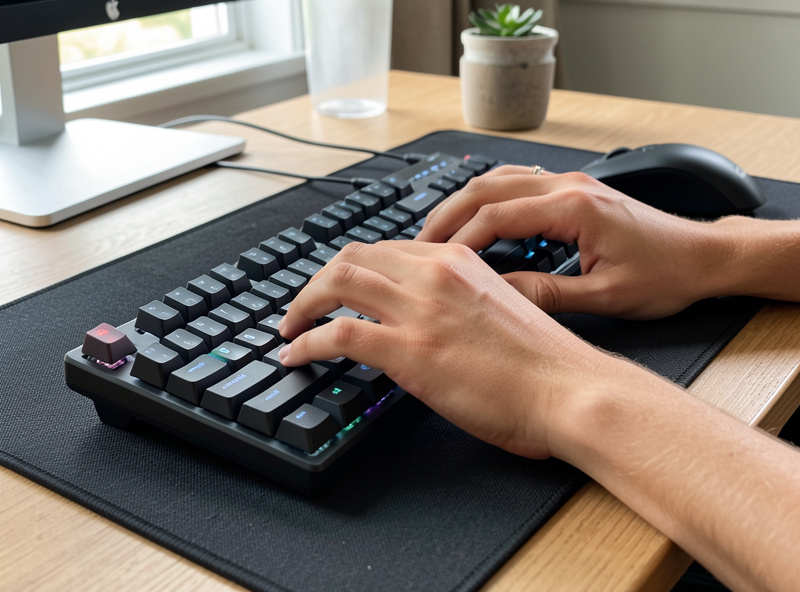
SA is the showstopper — very tall, deeply scooped, with a retro typewriter feel and the loudest, most resonant sound of the three. It is also the one you have to want. The height changes your wrist angle enough that you will likely want a palm rest, and the typing experience is slower and more deliberate. People either fall in love with SA or quietly swap it back out within a week.
On my sound rig, SA was dramatically deeper and louder than Cherry on the identical board and switches — the extra cap height acts like a bigger resonating chamber. That is the draw and the warning in one. If you type in a shared space, SA is loud. If you want a board that feels like an event every time you sit down, nothing in this trio matches it. I love mine and I would never recommend it as a first set; it is a second or third purchase, made with eyes open.
Adaptation and Long-Term Comfort
The bigger the height change, the longer your hands take to adapt — and that adaptation cost is the part buyers underestimate. Moving between OEM and Cherry is nearly free because the heights are close; jumping from a low Cherry board to SA is a genuine relearning period of a few days, where accuracy dips and the back rows feel far away. Neither is a defect; it is physics, and knowing it up front turns a frustrating first week into an expected one.
Long term, comfort comes down to how your wrists sit. Lower profiles like Cherry keep your hands closer to flat, which most people tolerate for long sessions without a rest. Taller profiles tilt your wrists back and reward a palm rest. I type for a living half the day, so I weight long-session comfort heavily, and that bias is exactly why my daily board wears Cherry while SA lives on a board I use for shorter, more deliberate sessions. Match the profile to how long you actually sit at the board, not to how it looks in a render.
One detail that surprised me the first time I A/B tested these on my sound rig: the OEM-to-Cherry sound gap is smaller than people claim, while the Cherry-to-SA gap is bigger than the photos suggest. Recorded same mic, same distance, the SA set read noticeably deeper and fuller, where OEM and Cherry were close enough that the thicker plastic mattered more than the profile shape between those two. That is the kind of thing you only learn by isolating the variable instead of comparing two different boards from two different reviews. If sound is your priority, the jump worth paying for is into SA or into thick PBT Cherry — not the lateral OEM-to-Cherry hop most first-time buyers obsess over.
Which Should You Buy?
Buy Cherry if you want the safest, most comfortable daily; stay on OEM if your stock caps already feel right and you only want better plastic; choose SA only if you specifically want height, drama, and a deeper sound. The decision is really about how much change you are looking for. Cherry is a refinement, OEM is a hold, SA is a transformation.
My standing advice for a first profile upgrade is a thick PBT Cherry set — it is the lowest-regret purchase in the whole hobby. As an Amazon Associate I earn from qualifying purchases. A solid Cherry-profile PBT set covers most people completely, and if you are chasing the tall retro look instead, an SA-profile set delivers the drama — just budget for a palm rest with it.
Frequently Asked Questions
Is SA or Cherry profile better for typing?
Cherry is better for fast, comfortable everyday typing because it is low and your fingers move less. SA is taller and more deliberate, which many typists enjoy for character but find slower. For pure typing comfort over long sessions, Cherry wins for most people.
What profile are stock keyboard keycaps?
Most prebuilt and stock keyboards ship with OEM profile keycaps. OEM is a medium-height sculpted shape, so if you have never changed your keycaps you have almost certainly been typing on OEM and your muscle memory is built around it.
Does SA profile really sound louder?
Yes. On the same board and switches, SA sounds noticeably deeper and louder than Cherry because the taller caps create a larger internal air chamber that resonates more. If you type in a shared or quiet space, this is worth factoring into the decision.
Do I need a wrist rest for SA keycaps?
Most people do. SA caps are tall enough to raise your typing angle significantly, and without a palm or wrist rest the reach to the back rows can feel strained. Plan to add one if you switch to SA from a lower profile.
Will switching from OEM to Cherry feel different?
Slightly. Cherry sits a little lower than OEM, so the board feels marginally quicker and the sound drops a touch. Most people adapt within an hour, and the change is small enough that it rarely causes the typos a flat uniform profile would.