This information is for educational purposes. Keyboard work involves small parts, soldering irons, and electronics — work in a ventilated space when soldering, unplug boards before opening them, and modding a board may void its warranty. When in doubt, check the manufacturer's documentation first.
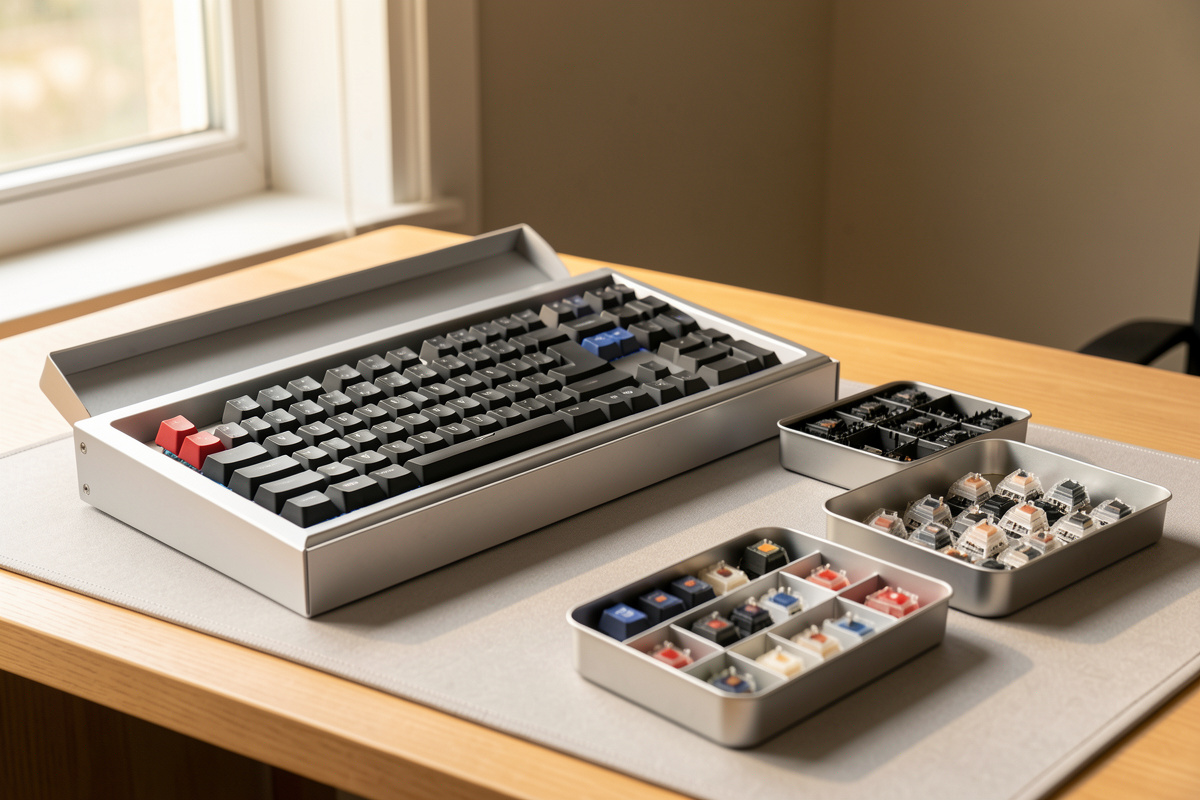
A keyboard group buy is a pre-order that funds a production run before it exists: you pay upfront, the vendor manufactures the batch, and the board ships months later — commonly six to eighteen months after the buy window closes. It is crowdfunding for a hobby that runs on patience, and the money usually leaves your account long before anything touches your desk.
I have been on both sides of that wait — the kit that arrived early and flawless, and the one that went quiet for a year while I refreshed a spreadsheet of nothing. This guide is the whole process, start to finish, written by someone who treats group-buy hype with a project manager’s skepticism rather than a collector’s adrenaline. By the end you will know exactly what happens between an idea and your doorbell, where your money is exposed, and how to tell a run worth joining from one that just feeds the drawer.
The short version: how a group buy actually works
A group buy pools enough buyers to justify a single manufacturing run of a custom keyboard, keycap set, or switch. The vendor opens a window — typically two to four weeks — you pay in full during that window, the window closes, and production begins on the exact quantity ordered. Nothing is sitting in a warehouse when you buy. You are funding the tooling, the materials, and the labor for a thing that does not exist yet.
That single fact explains every other quirk of the process. The long timelines, the no-refund policies, the spec changes mid-run, the agony of the wait — all of it follows from the truth that you bought a promise, not a product. Understanding that is the difference between a buyer who reads a delay update calmly and one who lives in the vendor’s Discord at 2 a.m. For the full beginner breakdown, I wrote a dedicated piece on what a keyboard group buy is that walks the concept from zero.
IC to GB to your doorbell: the full timeline
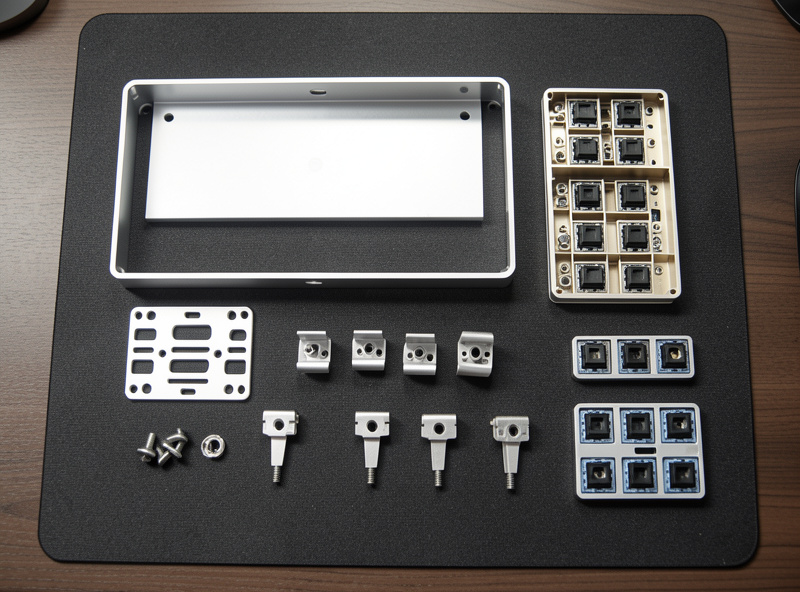
Every group buy follows the same arc, and knowing each stage tells you exactly how far from delivery you actually are. The hobby loves to skip ahead in the conversation, but the calendar does not.
Interest Check (IC). A designer posts renders and a concept to gauge demand. No money changes hands. You vote in polls, comment on the layout, and the designer decides whether enough people care to commit to tooling. Most ICs never become group buys, which is healthy — it is the hobby’s free market filtering ideas before anyone pays. I cover how to participate usefully in my keyboard interest check guide.
Group Buy (GB). The buy window opens. You pay in full. The vendor needs to hit a minimum order quantity (MOQ) for the run to proceed; if it falls short, the buy is cancelled and refunded. When the window closes, the count is locked and production is committed.
Production. CNC machining, anodizing, injection molding, dye-sub or doubleshot keycap manufacturing — whichever applies. This is where months disappear. Factory queues, Lunar New Year shutdowns, anodizing rejects, and shipping container backlogs all live here, and none of them are visible from your order confirmation.
Fulfillment. The finished batch ships from the factory to the vendor, gets quality-checked and sorted, and then ships to you. International buyers add a customs leg here, which is exactly where proxy services earn their fee.
Realistically, budget twelve months from the day you pay to the day you build, and treat anything faster as a pleasant surprise. The relationship between these three states — and why the in-stock era changed the math — gets its own breakdown in IC vs GB vs in-stock explained.
The money: what you pay, when, and what protects it
You pay the full amount during the buy window, upfront, for a product that ships much later. That timing creates the single biggest risk in the hobby, because most payment protection is built around fast delivery and a group buy is the opposite of fast.
How you pay matters more than what you pay. PayPal Goods and Services gives you a dispute window — historically around 180 days — and a measure of buyer protection. The problem is arithmetic: if delivery lands fourteen months out, your protection window expired six months before the board shipped. A vendor that asks for PayPal Friends and Family, crypto, or a bank transfer is asking you to surrender every recourse you have, and that request alone should change your decision. I unpack the full picture in group buy risks and refund realities, because the gap between “PayPal protected” and “actually protected” is where most buyers get hurt.
Group buy vs interest check vs in-stock, at a glance
Three ways to acquire a custom board, three completely different risk and time profiles. The table is the fastest way to see why the hobby’s center of gravity has shifted toward in-stock for anyone who is not chasing a specific design.
| Factor | Interest Check (IC) | Group Buy (GB) | In-Stock |
|---|---|---|---|
| Money paid | None | Full amount upfront | Full amount at checkout |
| Product exists? | No (concept only) | No (made after payment) | Yes (ships now) |
| Typical wait | N/A | 6–18+ months | 1–7 days |
| Refundable? | N/A | Rarely after window closes | Standard return policy |
| Design choice | Maximum (you shape it) | Wide (colorways, kits) | Whatever is on the shelf |
| Best for | Shaping a future board | A design you cannot get otherwise | Your first board, or impatience |
The risks nobody prints on the marketing render
The renders are gorgeous and the colorway names are poetry, and none of that is the product. The product is a factory output that arrives a year later, and the gap between render and reality is where group buys go wrong. The most common failure is simply time: a six-month estimate becomes fourteen, communication thins, and your enthusiasm curdles into spreadsheet anxiety.
Beyond delay, the real exposures are quality variance between the prototype unit and your production unit, mid-run spec changes you did not sign up for, an MOQ that quietly missed and stalled the run, and — the one that actually empties wallets — a vendor that goes dark after collecting funds. None of these are common enough to make the hobby a scam, but all of them are common enough that “who is running this” matters more than “how good is the render.” That risk literacy is the entire point of deciding whether a group buy is worth joining.
How I decide whether a run is worth my money
My filter is boring on purpose, because boring is what survives a fourteen-month wait. I start with the vendor’s delivery history — not their renders, their track record of actually shipping previous runs on something resembling their estimates. A vendor with three clean deliveries behind them is a different proposition than a first-timer with a beautiful Instagram.
Then I check the payment method (Goods and Services or I walk), the realism of the timeline (anyone promising three months is either new or lying to themselves), whether extras will likely sell in-stock later (if so, the FOMO is fake and I can wait), and whether I actually want this specific board or just want to want something. That last question kills more of my potential purchases than any red flag. “Endgame” is a joke the hobby plays on your wallet, and a group buy is the most expensive way to learn that lesson. If you are still early in the hobby, my honest answer on whether to wait for a group buy is usually no — buy something in-stock, learn your preferences, then commit to a run with money you understand.
Where the group buys actually happen
Group buys live on a handful of platforms, and missing the announcement is the most common way buyers lose out on a board they wanted. The core venues are the long-running keyboard forums, the dedicated group-buy subreddits, designer and vendor Discord servers, and the newsletters of the regional vendors who host runs. Each surfaces different information at different stages, and serious buyers watch more than one. I mapped the whole landscape — what each platform is good for and how to set alerts — in the best places to follow keyboard group buys.

Proxies and the international buyer’s tax
If you live outside the region a group buy ships from, a proxy can be the difference between a sane fee and a punitive one. A proxy vendor consolidates orders for buyers in their country, places one bulk order with the host, and handles the customs and last-mile shipping locally. You pay the proxy — base cost plus a service fee — and they take on the coordination. It adds a second trust layer and a cost, but for buyers in Southeast Asia, Oceania, or anywhere far from the host, it routinely beats paying international shipping and customs twice. The mechanics, the fees, and how to vet a proxy are in my proxy services guide.
Should a beginner join a group buy at all?
Honestly, usually not. A group buy asks you to spend a meaningful amount of money on preferences you have not formed yet, then wait a year to find out you were wrong. Your first board should teach you what you like — which is far cheaper to learn from an in-stock barebones or prebuilt board you can return. My budget build guide exists precisely so you can spend a hundred and change, build something this week, and discover your switch and layout opinions before you commit hundreds to a run that ships next year.
Once you know that you want a 65% with a specific mount and a colorway nobody stocks — that is when a group buy stops being FOMO and starts being a deliberate purchase. Knowing why a tuned custom feels better in the first place is what makes the wait worth it. As an Amazon Associate I earn from qualifying purchases. If you would rather skip the wait entirely, a solid in-stock hotswap keyboard will teach you more about your preferences in a week than a year of refreshing a fulfillment thread.
The vocabulary you need before you join
Group-buy threads are written in a dialect, and not knowing it is how people order the wrong thing. The terms are simple once someone defines them plainly, which the listings rarely bother to do.
Base kit is the standard set of keycaps or the standard board configuration — the part that covers a normal layout. Kits or extension kits are add-ons: a spacebar kit, an ergo kit for split and ortholinear layouts, an international kit for non-US legends, a novelties kit of accent keys. Buy only the kits your actual keyboard needs; the ergo kit is wasted money on a standard board, and I have watched plenty of first-timers pay for keys that will never leave the bag. Novelties are the decorative accent caps designers use to sell the set, and they are where keycap budgets quietly balloon.
Colorway is the named color scheme. R2, R3 and so on mark later rounds of a popular set or board — a sign the design has a track record, which is reassuring, though later rounds can still change factories. For keycaps specifically, the profile and material matter as much as the colorway; my complete keycap guide and the breakdown of what the GMK hype is actually about will keep you from paying premium-set money for something your fingers will not notice.
What “extras” really means for the FOMO math
After a run delivers, vendors frequently sell the overage — the units made to cover defects and cancellations — as in-stock “extras.” This single fact deflates most group-buy urgency. If a set or board is popular enough that you are agonizing over joining, it is often popular enough to reappear as extras or in a later round, sometimes at a comparable price and with zero wait. The boards and sets that truly never reappear are the genuinely niche ones, and those rarely generate FOMO in the first place.
So the honest version of the urgency question is narrow: will I regret missing this exact configuration if it never returns, badly enough to wait a year and accept the risk? For maybe one purchase in five, the answer is a clear yes, and that is the purchase a group buy exists for. For the other four, waiting for extras or buying in-stock is the calmer, cheaper move — and you will have learned more about your own preferences by then anyway. Understanding the layout you actually type best on, covered in my keyboard layout guide, removes most of the remaining “but what if” before you ever open a buy page.
A realistic first-year buying order
If I were starting over with what I know now, I would not touch a group buy for months, and the boards would still be excellent. The order that builds taste instead of regret looks like this: start with an in-stock hotswap board you can return — my picks for the best hotswap keyboard under $100 exist for exactly this step. Type on it for a few weeks, swap a couple of switch types, and notice what you actually prefer in weight and sound rather than what a render told you to want.
From there, a budget custom build teaches you assembly, stabilizer tuning, and what a tuned board feels like for around a hundred and thirty in parts. Only after all of that — once you can finish the sentence “my next board needs to be a ___ because the last one was ___” — does a group buy become a deliberate, informed purchase instead of an expensive coin flip. The hobby will still be running buys next year. It always is. The patience you build waiting through your first in-stock boards is the same patience that makes a fourteen-month group-buy wait survivable.
What happens when a group buy goes wrong
Most runs deliver. But the ones that do not tend to fail in three recognizable ways, and knowing the shapes in advance keeps a bad outcome from becoming a blindsiding one. The first is the failed MOQ: the buy window closes below the minimum, the vendor cancels, and you are refunded. This is the cleanest failure — you lose nothing but the anticipation, and it is the system working as designed to stop an unviable run.
The second is the slow-motion delay. The board does not die; it just keeps slipping. A six-month estimate becomes ten, then fourteen, the updates get shorter and vaguer, and your money sits in someone else’s account the whole time. This is uncomfortable but usually ends in delivery. The right response is patience plus documentation — keep your order confirmation, the original timeline, and every update, because if it ever crosses into the third category you will want them.
The third is the genuine failure: a vendor that collects funds and goes dark, or delivers product so far below the prototype that it is unusable. This is rare, and it is exactly what a track record screens out before you ever pay. Your recourse depends entirely on how you paid — a PayPal Goods and Services dispute filed inside its window, or a card chargeback, are your only real levers, and both are weakened by the long timelines that define the hobby. Friends and Family payments have no recourse at all. This is the whole reason I treat payment method as a hard gate rather than a preference, and why the refund-realities guide is the one piece in this cluster I would not let a new buyer skip. The boards are worth it. The carelessness is not.
Frequently Asked Questions
How long does a keyboard group buy take to ship?
Budget six to eighteen months from the day you pay to the day it arrives. Production queues, factory holidays, and shipping backlogs all add time, and the early estimate is almost always optimistic. Treat anything under six months as a pleasant surprise rather than the norm.
Can you get a refund on a keyboard group buy?
Rarely once the buy window closes. Most runs are non-refundable after the count is locked because your money has already funded production. The main exception is a failed minimum order quantity, which triggers a refund. Pay with PayPal Goods and Services to keep what little dispute protection exists.
Is a group buy cheaper than buying in-stock?
Not usually. Group buy pricing reflects a single production run, not a discount, and extras often sell in-stock later at a similar price. You join a group buy for a specific design you cannot otherwise get, not to save money. In-stock is frequently the cheaper and faster path.
What does MOQ mean in a keyboard group buy?
MOQ is the minimum order quantity the vendor needs to justify a production run. If the buy window closes below that number, the run is cancelled and buyers are refunded. A run that barely clears MOQ can also face longer delays, since the factory prioritizes larger orders.
Should a beginner join a keyboard group buy?
Usually not. A group buy commits real money to preferences you have not formed yet, then makes you wait a year to find out. Buy an in-stock barebones or prebuilt board first, learn your switch and layout opinions, then join a run once you know exactly what you want.
What is the difference between an IC and a GB?
An interest check (IC) gauges demand with no money and no commitment, often never becoming a real product. A group buy (GB) is the actual pre-order where you pay in full and production is committed after the window closes. An IC always comes first when it happens at all.