This information is for educational purposes. Keyboard work involves small parts, soldering irons, and electronics — work in a ventilated space when soldering, unplug boards before opening them, and modding a board may void its warranty. When in doubt, check the manufacturer's documentation first.
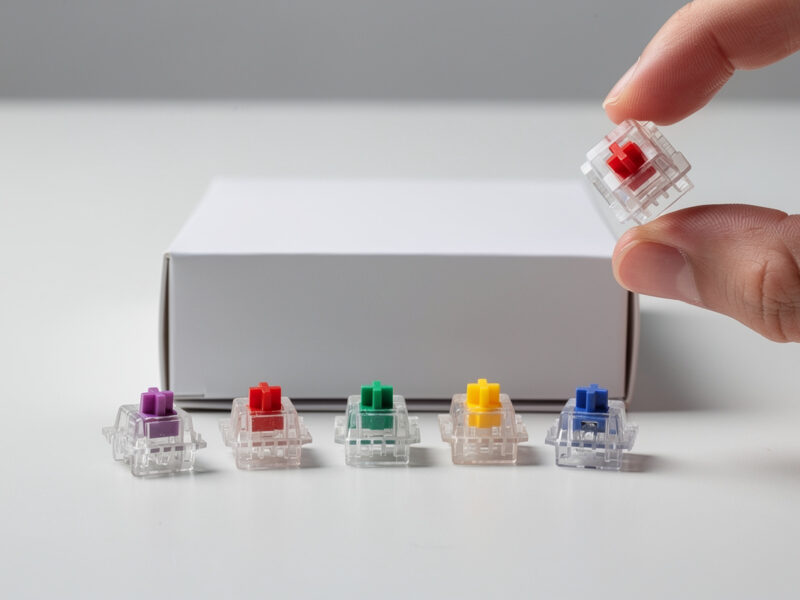
Lubing switches is worth it for the right switch and the right person — and a genuine waste of an evening for everyone else. That’s the honest answer the hobby buries under tutorial after tutorial that assume the conclusion. I’ve lubed thousands of switches at my station, and I keep the unlubed versions of the same switches in the next drawer specifically so I can answer this question without lying to myself. So let’s do the actual hours-versus-payoff math instead of the FOMO version.
This isn’t a “no, never bother” piece. Lubing is a real mod that solves real problems. It’s a “be honest about which problems, and whether you have them” piece — because the difference between a transformed board and a wasted Saturday is entirely whether your switches needed it in the first place.
What you actually get for the hours
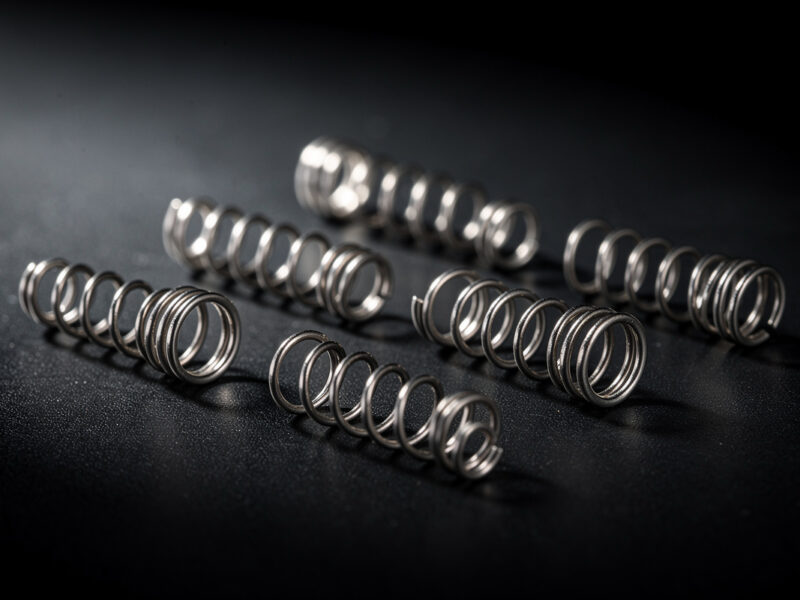
Strip away the marketing and lubing delivers two reliable improvements and one minor one. The reliable two: scratch removal (the gritty downstroke on cheap linears disappears) and spring ping reduction (the metallic boing under the keypress gets damped). The minor one: a small deepening of the sound, far smaller than what foam or mounting style do to the same board.
Notice what’s missing from that list. Lubing doesn’t make a switch lighter or heavier in any way you’ll feel. It doesn’t fix stem wobble. It doesn’t turn a budget switch into a boutique one. And on a switch that’s already smooth — which describes a lot of modern stock switches — it delivers almost nothing, because there was no scratch to remove. The payoff is proportional to how bad the switch was to begin with.
The time cost, told honestly
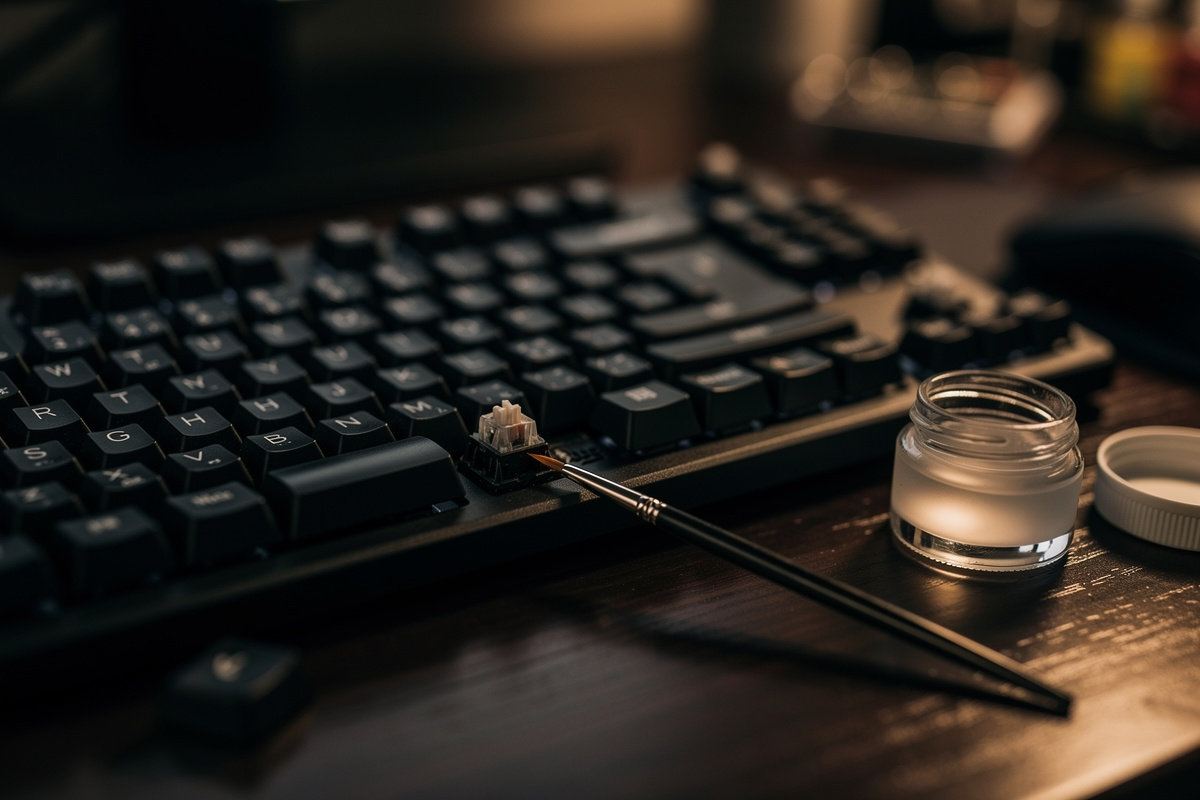
Here’s the number the 30-minute tutorials won’t give you. A full board of roughly 70 to 90 switches, lubed properly your first time — open, brush rails, lube springs, reassemble — is an evening. Several hours. With a dialed-in batch workflow and experience, that drops, but it never becomes quick. Anyone showing you a 30-minute full-board lube is either skipping the spring step, going so thin it’s barely lube, or has edited out the reality.
That time cost is the whole crux of the worth-it question. Three or four hours is nothing if you enjoy the bench work — and plenty of builders genuinely do; the tinkering is the hobby. Three or four hours is a lot if you just want a nicer board and see lubing as a chore standing between you and typing. Be honest with yourself about which camp you’re in, because that single fact decides the answer more than any property of the switch.
When lubing is clearly worth it
- Your switches are audibly scratchy. If you can feel grit on the downstroke or hear a high rasp, lubing fixes exactly that, reliably. This is the strongest case.
- Spring ping is driving you up the wall. A pingy board is genuinely unpleasant, and lube (or a spring swap) is the direct cure.
- You enjoy the process. If a quiet evening at the bench sounds good rather than tedious, the time cost isn’t a cost — and the consistency of a careful hand job beats anything factory.
- The board is a keeper. Lubing is irreversible and labor-heavy; it pays off on a board you’ll type on for years, not a switch you’re still auditioning.
When it’s honestly not worth it
- Your switches are already smooth. Many current stock switches — and all decently factory-lubed ones — have little scratch to remove. Lubing them is polishing a clean window.
- Your real problem is elsewhere. A rattly stabilizer or a hollow, boomy case ruins a board far more than unlubed switches do, and stab tuning plus a bit of foam is higher ROI for less time. Fix those first; you may find you no longer care about lubing.
- You see it as a chore. If the bench time is pure tedium to you, factory-lubed switches exist precisely so you can skip this. There’s no shame in it.
- You’re tempted to lube everything reflexively. Lubing isn’t a virtue you perform on every switch you own. It’s a fix for a specific problem.
The cheaper alternatives most people skip
If your goal is a better-feeling, better-sounding board and you’re not in love with the bench time, there are higher-ROI moves than lubing every switch. A spring swap alone kills ping at the source and changes the weight, and it’s a tenth of the effort of a full lube. Tuning your stabilizers removes the rattle that most people actually hear as “a bad-sounding board.” A bit of case or plate foam kills hollowness. And simply buying switches that are already smooth or factory-lubed skips the question entirely.
I’m not talking you out of lubing — I lube constantly. I’m saying that if you do the cost-benefit honestly, lubing every switch is rarely the first move, and for a lot of people it’s never the necessary one. The builders who get the most from it are the ones who actually wanted to be at the bench anyway.
The middle path nobody talks about
Here’s what I actually do most of the time, and it’s neither “lube everything” nor “lube nothing.” I spring-lube and film during a switch session, and only fully rail-lube the switches that genuinely feel scratchy. Spring lube is fast, kills the worst sound artifact, and applies to every switch in a single bagged step. Filming takes ten seconds while the switch is open. Full rail-lubing is the slow part, so I reserve it for switches that earn it.
That middle path gets you 80% of the perceived improvement for maybe 40% of the time, because ping and housing wobble are what most people actually notice, while scratch on an already-decent switch is a subtle thing. If you’ve never lubed before and you’re on the fence, try this approach on one board before you commit to a full rail-lube marathon. You’ll learn your own tolerance for the bench work, and you’ll find out whether your switches even needed the full treatment — most of the time, you’ll discover the springs were doing most of the damage.
The one group I’d steer away from any of this: someone whose board sounds bad but whose switches are fine. That’s almost always a stabilizer or case-foam problem masquerading as a switch problem, and lubing switches won’t touch it. Diagnose before you disassemble.
Some links below are affiliate links. As an Amazon Associate I earn from qualifying purchases — at no extra cost to you. I only point to gear I’d actually put on my own bench.
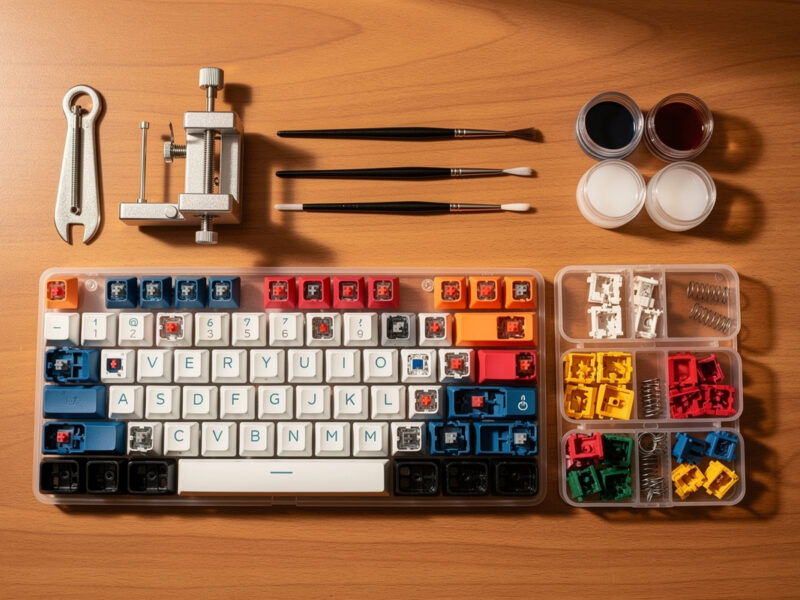
If you’ve decided you’re in the worth-it camp, the kit is small and cheap: a Krytox 205g0 switch lube for linears, a fine switch lube brush set, and a switch opener with stem holder to keep parts under control. That’s the whole entry kit — resist the bundled “tuning kits” that mark up a dollar’s worth of brush.
Frequently Asked Questions
Is lubing switches actually worth it?
It is worth it if your switches are scratchy or pingy, if the board is a keeper, and if you enjoy the bench time. It is not worth it if your switches are already smooth, if your real problem is a rattly stabilizer or hollow case, or if you see the several-hour job as a chore. The payoff is proportional to how bad the stock switch was to begin with.
How long does it take to lube a whole keyboard?
Realistically several hours for a full board of 70 to 90 switches your first time, dropping somewhat with experience and a good batch workflow but never becoming quick. The 30-minute claims you see in tutorials skip steps, usually the spring lube. Budget an evening before you start so you do not abandon the board half done.
Does lubing switches change how heavy they feel?
No, not in any way you will feel. A correct thin coat of lube adds nothing measurable to the spring weight. If you want a different actuation force, that is a spring swap, not a lubing job. Lubing changes smoothness and sound, not weight.
What is a better use of my time than lubing every switch?
For most people, tuning the stabilizers and adding a little case foam fixes more of what they actually hear as a bad-sounding board, for far less effort. A spring swap alone kills ping and changes weight in a tenth of the time of a full lube. And buying switches that are already smooth or factory-lubed skips the question entirely.
Should I lube switches that are already smooth?
There is little point. Lubing removes scratch, and if a switch has no scratch to remove the payoff is close to nothing. Many modern stock switches and all decent factory-lubed switches fall into this category. Spend the effort where there is an actual problem to solve.
Related Guides
- Switch lubing and filming: the complete guide
- Krytox 205g0 vs Tribosys 3203 — which lube for which switch
- Switch spring ping fix — killing the boing at the source
- Are factory-lubed switches good enough now