This information is for educational purposes. Keyboard work involves small parts, soldering irons, and electronics — work in a ventilated space when soldering, unplug boards before opening them, and modding a board may void its warranty. When in doubt, check the manufacturer's documentation first.
Factory-lubed switches have gotten genuinely good — good enough that for most people, hand lubing is now optional rather than necessary. That’s a real change from a few years ago, when factory lube was a sloppy, uneven afterthought you usually had to redo. If you just want a nice-feeling board without an evening at the bench, modern factory-lubed switches are a legitimate finish line, and I’ll tell you that honestly even though this whole site is built around the joy of tuning your own.
This is the most “buy nothing extra, do nothing extra” piece I’ll write about switches, and I stand behind it. The hobby loves to treat hand lubing as a mandatory rite of passage. It isn’t. Let’s separate where factory lube is genuinely enough from the narrow cases where doing it yourself still wins.
What “factory lubed” actually means now
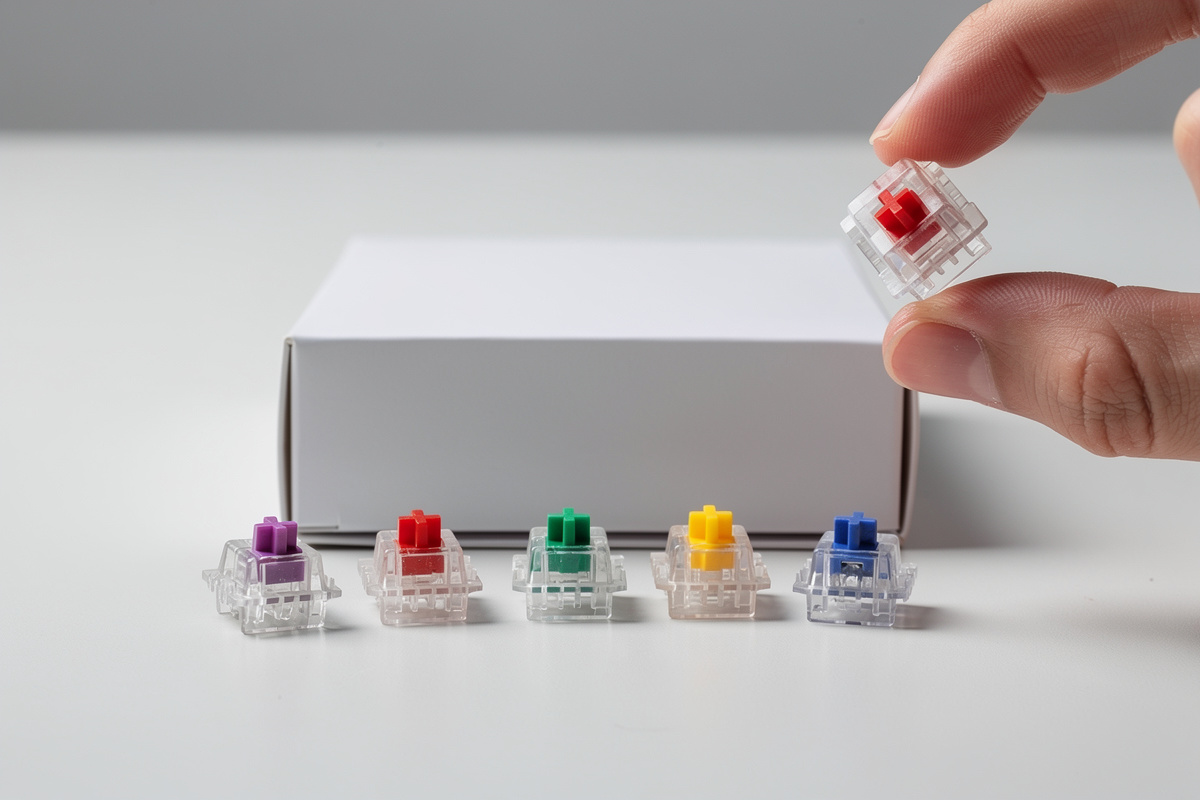
Factory lubing is exactly what it sounds like: the manufacturer applies lube during assembly, so the switch arrives already tuned to some degree. The quality of that has climbed sharply. Several current switches ship with a competent, reasonably even factory lube job — the kind that removes most of the scratch and damps most of the ping without you touching them.
The reason this matters: the single biggest benefit of lubing — scratch removal on the rails — is precisely what a decent factory job already delivers. If the most important part is done at the factory, the marginal value of redoing it by hand shrinks a lot. That’s the crux of the whole “is it good enough” question.
Where factory lube is genuinely good enough
- Daily-driver boards. A keyboard you type on all day and don’t obsess over is exactly the use case where modern factory-lubed switches shine. They feel good, you skip the evening, done.
- People who don’t enjoy the bench. If lubing sounds like a chore, factory lube exists precisely so you can opt out without settling for a scratchy board. No shame in it.
- First builds. Starting out, factory-lubed switches let you enjoy a good-feeling board immediately and decide later whether tuning is a rabbit hole you want to go down.
- Most users, most of the time. Honestly, this is the bulk of people. The gap between a good factory job and a careful hand job is real but small, and small enough that most people would never notice it blind.
Where hand lubing still wins
- Consistency. A careful hand job is more uniform switch-to-switch than even good factory lube, which still varies a little across a batch. If you want the last 10% of evenness, hand lubing gets you there.
- The bench is the point. Plenty of builders genuinely enjoy the process — the tinkering is the hobby. For them, “is factory good enough” misses the point; they want to do it.
- Specific tuning. If you want a particular lube on a particular surface, or you’re combining lubing with a spring swap and films in one pass, you’re opening the switch anyway — hand lubing folds in for free.
- Unlubed switches you love. If your favorite switch only comes stock, hand lubing is the only way to get it tuned.
| Factory-lubed | Hand-lubed | |
|---|---|---|
| Scratch removal | Good (the main job, done) | Excellent |
| Consistency | Good, varies a little | Best (uniform if careful) |
| Your time cost | None | An evening per board |
| Tuning control | None (as shipped) | Full (lube, films, springs) |
| Best for | Daily drivers, most users | Enthusiasts, last-10% builds |
Why factory lube got so much better
It’s worth understanding why this changed, because it tells you what to trust. A few years ago, factory lubing was rare and crude — applied inconsistently, often in the wrong places, sometimes so heavy it gummed the switch. The hobby’s default advice was to assume any factory lube was bad and plan to redo it. That advice has aged out.
What changed is that the whole switch market matured. Tuned, smooth switches stopped being a boutique novelty and became a baseline expectation, and manufacturers responded by building lubing into their assembly properly rather than as a marketing checkbox. The big switch makers now have genuine factory lubing processes, and the result is switches that arrive doing the most important thing — gliding instead of scratching — without you lifting a brush. The improvement is real and broad, not a one-off from a single brand.
The practical takeaway: the old reflex to distrust factory lube is outdated. On a reputable current switch described as factory-lubed, the lube is probably fine, and the burden of proof has flipped — assume it’s good unless the switch tells you otherwise rather than assuming you’ll need to redo it.
The money-and-time math nobody frames honestly
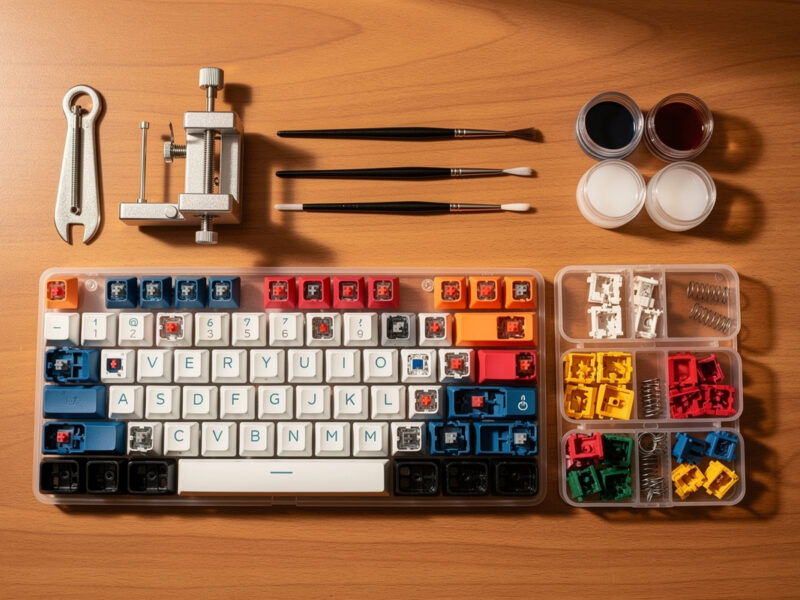
Here’s a calculation the hobby rarely does out loud. Hand lubing isn’t free even when the lube is cheap — it costs you an evening per board, plus the upfront cost of an opener, stem holder, brushes and lubes. For someone who builds constantly, that kit pays for itself across many boards and the time is the hobby. For someone building one or two keyboards, the kit and the hours are a real cost stacked on top of switches that may already be smooth.
So the honest framing is: factory-lubed switches sometimes cost a little more per switch than the dry version, but they save you the tuning kit and the evening. For a one-or-two-board person, that’s frequently the better total deal, not just the easier one. For a serial builder who already owns the station and enjoys the bench, hand lubing dry switches is cheaper per board and more rewarding. Neither answer is universally right — it depends entirely on how many boards you’ll build and whether you want to be at the bench at all.
The honest gap, in plain terms
If you put a good factory-lubed switch next to the same switch I hand-lubed carefully, the hand-lubed one would edge it — slightly smoother, more consistent across the board. But it’s a small edge, and in blind typing most people couldn’t reliably pick the hand-lubed board. The factory job does the heavy lifting; hand lubing polishes the last bit.
That means the real question isn’t quality — it’s whether the polish is worth your evening. For an enthusiast who enjoys the bench, absolutely. For someone who just wants a good board, the factory already got you 90% of the way there, and chasing the last 10% with hours of labor is a choice, not a necessity.
How to buy factory-lubed switches well
Not all factory jobs are equal, so a little care helps. Look for switches that are explicitly described as factory-lubed (some are; many budget switches still ship dry). Read how people describe them out of the box — “smooth stock,” “no ping,” “doesn’t need lubing” are the signals you want. And keep your expectations calibrated: factory lube removes scratch and ping; it doesn’t transform sound, which is a case-and-mounting story regardless of how the switches were lubed.
One honest caveat about over-lubed factory switches: occasionally a factory job is too heavy, leaving a switch that feels slightly sluggish. It’s uncommon on reputable current switches but worth knowing — if a factory-lubed switch feels dead rather than smooth, that’s too much lube, and there’s not much you can do short of cleaning and re-lubing, which defeats the purpose.
What factory lube can’t do — and never could
Set expectations correctly and you’ll be happy with factory-lubed switches; set them wrong and you’ll be disappointed by something that was never the switches’ job. The biggest misconception is treating factory lube as a sound solution. It isn’t. Lube — factory or hand — addresses scratch and ping, which are switch-level problems. The overall sound character of a board — hollow versus full, clacky versus deep — is governed by the case, the mounting style, the plate material, the foam, and the keycaps. Factory-lubed switches in a hollow, unfoamed case still sound hollow.
So if you buy factory-lubed switches and the board still doesn’t sound the way you hoped, don’t blame the switches and don’t assume hand lubing would have fixed it. The fix is in the case: a bit of foam, a tape mod, a different mounting style. This is the same advice I’d give someone who hand-lubed and was underwhelmed — the switches did their part; the sound lives elsewhere.
The other thing factory lube can’t do is read your mind about weight and feel. If you want a heavier or lighter switch, that’s a spring choice you make when buying the switch, not something any lube job changes. Pick the actuation force you want up front, buy it factory-lubed, and you’ve handled both feel and smoothness without a single tool — which is exactly the point of this whole piece.
The link below is an affiliate link. As an Amazon Associate I earn from qualifying purchases — at no extra cost to you. I only point to gear I’d genuinely recommend.
If you’ve decided factory lube is your finish line, browse factory-lubed mechanical keyboard switches and look for ones described as smooth stock with no ping. That’s the whole shopping list — no brushes, no lube, no evening required.