This information is for educational purposes. Keyboard work involves small parts, soldering irons, and electronics — work in a ventilated space when soldering, unplug boards before opening them, and modding a board may void its warranty. When in doubt, check the manufacturer's documentation first.
Switch films make a small, real difference — and the honest answer to “are they worth it” is almost entirely “only because you’re already inside the switch.” They’re a second-order mod: they tighten housing wobble and nudge sound consistency, but they don’t transform a switch the way lubing does, and the hype around them outruns what they actually deliver. I’ve filmed thousands of switches and skipped films on thousands more, and I can tell you exactly when the ten seconds pays off and when it’s busywork.
This is the deflating-but-useful version. Films aren’t snake oil — they do a specific job. They’re just a much smaller lever than the marketing suggests, and whether you should bother depends entirely on your switch’s housings and whether you’ve got it open anyway.
What a switch film actually is
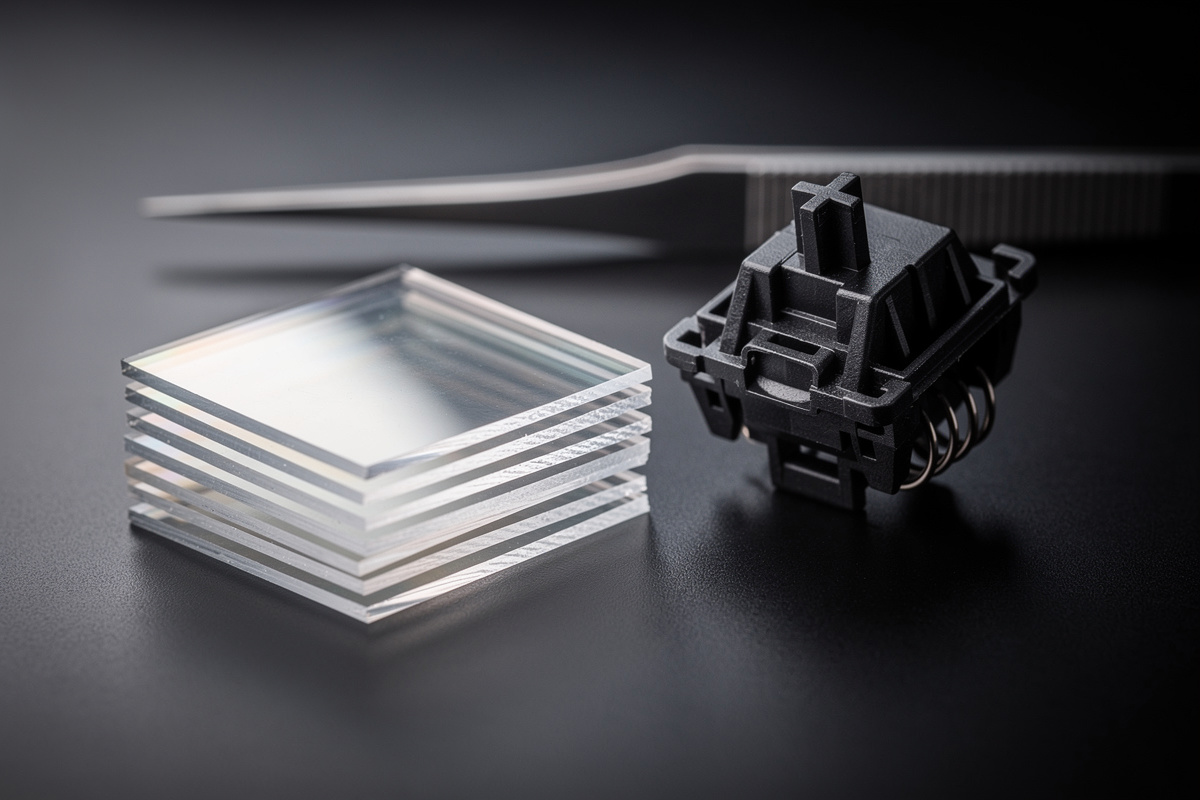
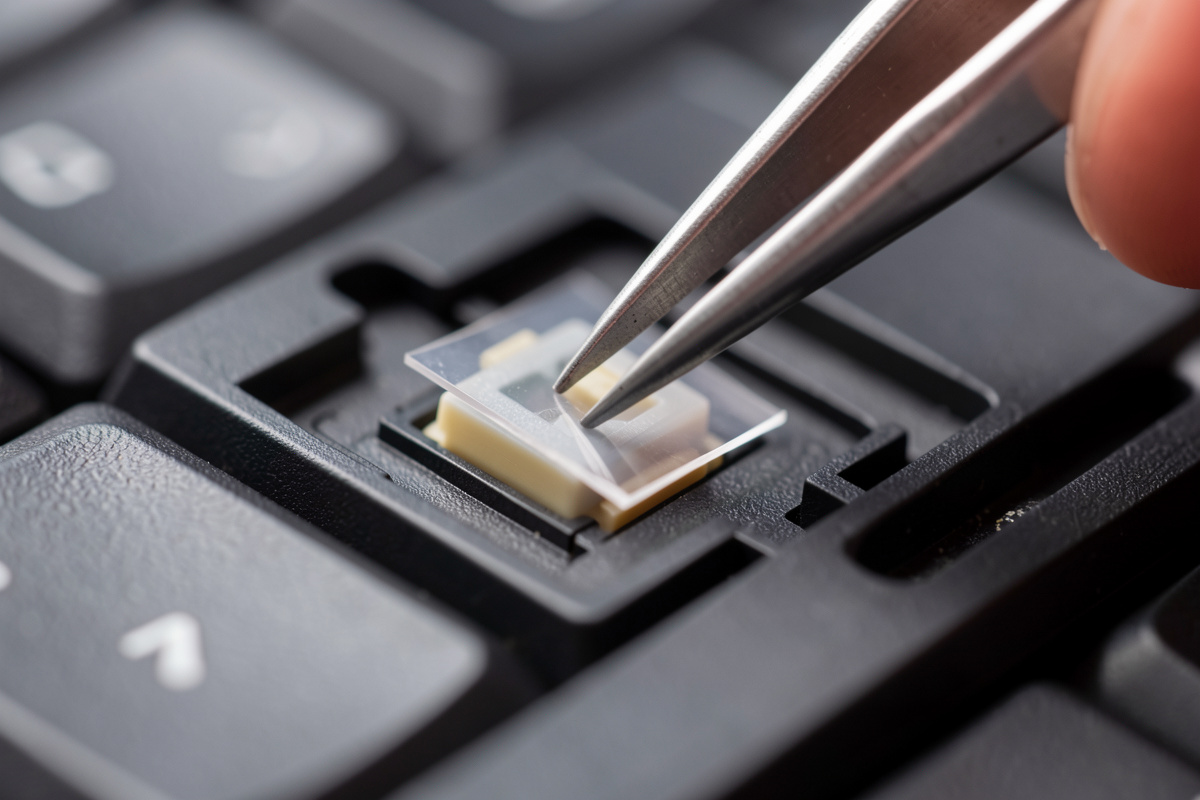
A film is a thin gasket cut to the shape of the switch’s housing seam — typically 0.1mm to 0.3mm thick — that sits between the top and bottom housing when you reassemble the switch. Manufacturing tolerances mean the two housing halves never fit perfectly; there’s a tiny bit of play. The film fills that gap so the halves clamp together tighter with no slop.
That’s the entire mechanism. It’s a shim. Everything films do flows from one fact: they make the housing fit tighter. They don’t touch the stem, the spring, or the rails, so they have nothing to do with smoothness — that’s lube’s job, and conflating the two is the most common confusion I see.
What films actually change
- Less housing wobble. The most concrete, feelable effect. A loose-housing switch has a faint side-to-side play in the top housing; a film removes most of it. On switches that wobble noticeably, this is a genuine improvement.
- Slightly more consistent sound across the board. By clamping every switch’s housing the same way, films reduce switch-to-switch variation. The board sounds a touch more uniform — subtle, but real if you listen for it.
- A marginally fuller bottom-out on some switches. A tighter housing rings less, which can deepen the sound a hair. Emphasis on marginal; this is the most overstated claimed benefit.
And what they don’t change: smoothness (that’s lube), actuation feel, weight, or anything about the stem travel. A scratchy switch is still scratchy after filming. If your problem is scratch, films are the wrong tool entirely.
The part that decides everything: your housings
Here’s the fact that the “do films make a difference” question hinges on, and that most tutorials skip: it depends entirely on how loose your switch’s housings already are.
Many modern switches — current Gateron and Cherry molds in particular — ship with tight housings already. Film one of those and the difference is close to nothing, because there was barely any slop to take up. On older molds, looser budget switches, or certain designs with known housing play, films do real work, because there was genuine wobble to remove.
So the test isn’t “do films work” in the abstract. It’s “does this switch have housing slop worth removing?” Press a top housing and feel for side-to-side play before you assume films will help. No play, no point.
Thickness: which film to buy
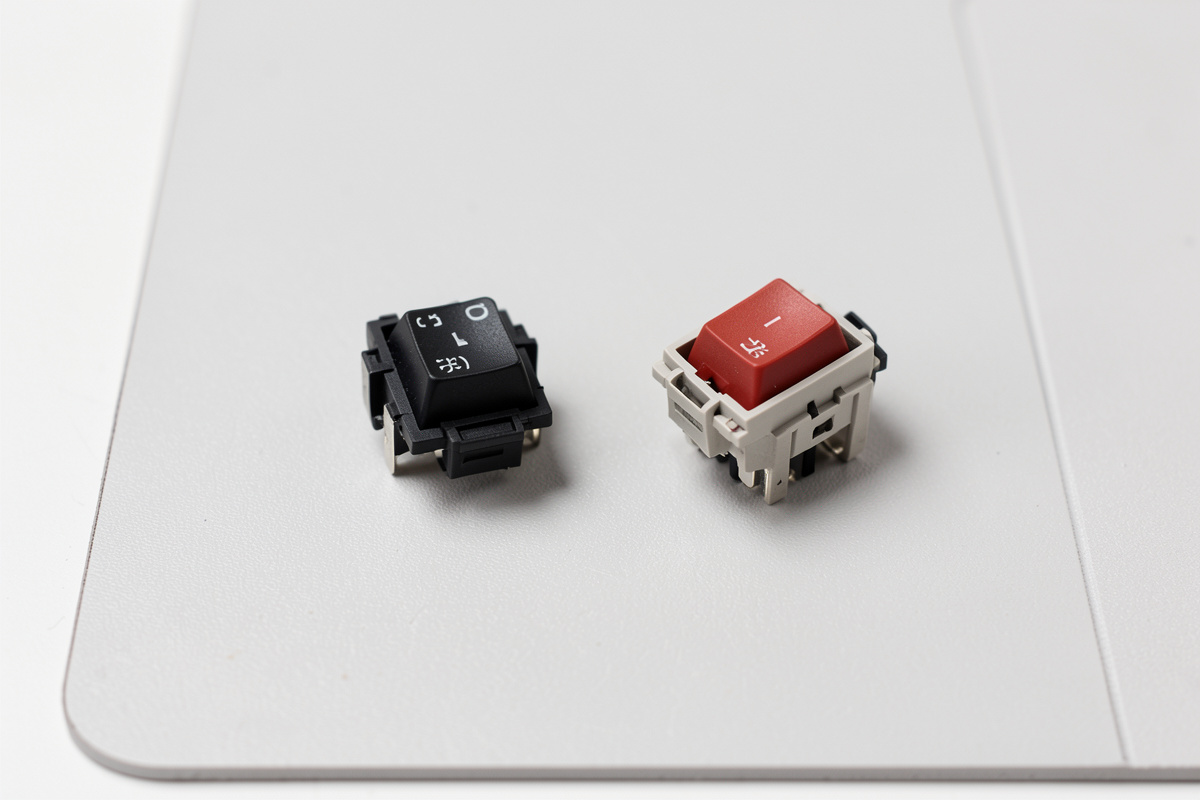
Films come in a range of thicknesses, and matching thickness to your housing gap matters. Too thin and you don’t take up the slop; too thick and the switch won’t close flush, leaving it gritty or refusing to snap shut.
- 0.15mm is my default and the safest all-rounder. It tightens most switches without fighting the housing closure.
- 0.2mm and up only on genuinely loose housings where 0.15mm doesn’t take up the gap. If a thicker film makes the switch hard to close, it’s too thick — drop down.
- 0.1mm for switches with only slight play, or for stacking precision on tight molds (rarely needed).
Material matters less than thickness. Polycarbonate films are the common rigid choice and do the wobble job well; thin foam-style films damp a touch more but compress more. For a first-timer, a pack of 0.15mm polycarbonate films covers the vast majority of switches.
Filming mistakes that make a switch worse
Films are low-risk, but there are a few ways to turn a free upgrade into a switch that feels worse than stock. After filming a lot of switches, these are the ones I see most.
- Too-thick film. If the film stops the housing from closing flush, the switch feels gritty, the click of the housing snapping shut never quite happens, and travel can feel off. The fix is always to step down a thickness, never to force it shut.
- Misaligned film. A film that’s off-center or pinched under a housing tab keeps the switch from seating. Take the extra second to drop it square onto the bottom housing before reassembling — this is where tweezers earn their keep.
- Filming the wrong switches. Spending an evening filming a board of tight-housing switches is effort for almost no return. Triage first: feel for wobble, film the loose ones, skip the tight ones.
- Expecting a sound transformation. If you film hoping to turn a clacky board “thocky,” you’ll be disappointed. Films nudge consistency; case foam, mounting style, and keycap material move the sound far more.
None of these are catastrophic — films pop right back out, so every mistake is reversible. That reversibility is actually one of the quiet arguments for films over lubing: if you get it wrong, you just take it out and try again, with no irreversible grease commitment.
The honest verdict: film while you’re in there
Here’s how I actually decide, every time. If I have the switch open to lube it, I film it — assuming the housing has slop worth removing. Adding a film to a switch that’s already apart costs maybe ten seconds, and the marginal improvement is free at that point. If a switch is closed and smooth and I’d have to open it only to film it, I almost never bother. The improvement doesn’t justify a dedicated disassembly pass.
That single rule resolves the whole “are films worth it” debate. They’re worth it as a rider on a lubing session. They’re rarely worth it as a standalone project. And on tight modern housings, they may not be worth it at all — feel for the wobble first.
Some links below are affiliate links. As an Amazon Associate I earn from qualifying purchases — at no extra cost to you. I only point to supplies I actually use at my station.
If you’ve decided your housings have slop worth taking up, a pack of 0.15mm switch films is the safe all-round choice, and a pair of fine precision tweezers makes placing them far less maddening than fingers. That’s the whole films kit.
Frequently Asked Questions
Do switch films actually make a difference?
Yes, but a small one, and only on switches whose housings are loose to begin with. Films take up the slop between the two housing halves, reducing wobble and making sound a touch more consistent. On tight modern housings the difference is close to nothing. They do not affect smoothness — that is what lube does, not films.
Are switch films worth it?
They are worth it as a rider on a lubing session, where adding a film costs about ten seconds while the switch is already open. For building an efficient lubing session, the switch lube station workflow guide covers the exact batch setup that makes doing all your films at once painless. They are rarely worth opening a switch for on their own, and may not be worth it at all on tight modern housings. Feel the top housing for side-to-side play first — no play means no point.
What thickness switch film should I use?
0.15mm is the safest all-rounder and my default. Step up to 0.2mm or more only on genuinely loose housings where 0.15mm does not take up the gap, and drop to 0.1mm for switches with only slight play. If a film makes the switch hard to close flush, it is too thick.
Do films make a switch smoother?
No. Films tighten the housing fit; they do not touch the stem, rails, or spring, so they have nothing to do with smoothness. A scratchy switch stays scratchy after filming. If your problem is scratch, the fix is lube, not films.
Should I film switches with tight housings?
Usually not. Many current Gateron and Cherry molds ship with tight housings already, so a film has almost no slop to take up and the difference is negligible. Test by pressing the top housing for side-to-side play before assuming a film will help — if it does not wobble, filming it is busywork.