This information is for educational purposes. Keyboard work involves small parts, soldering irons, and electronics — work in a ventilated space when soldering, unplug boards before opening them, and modding a board may void its warranty. When in doubt, check the manufacturer's documentation first.
Spring ping is that thin metallic “boing” ringing under your keypresses — and you fix it one of two ways: lube the springs you have, or swap in springs that don’t ping. Both work. Which one’s right depends on whether you also want to change how heavy the switch feels. I’ve chased ping out of more boards than I can count, and the single most useful thing I can tell you up front is that ping is almost always a spring problem, not a housing or case problem — so the fix lives at the spring, and nowhere else.
People waste hours adding case foam and re-mounting boards trying to kill a ping that foam can’t touch, because the sound originates inside the switch. Diagnose it to the spring first, then pick your fix. This guide does both.
What spring ping actually is
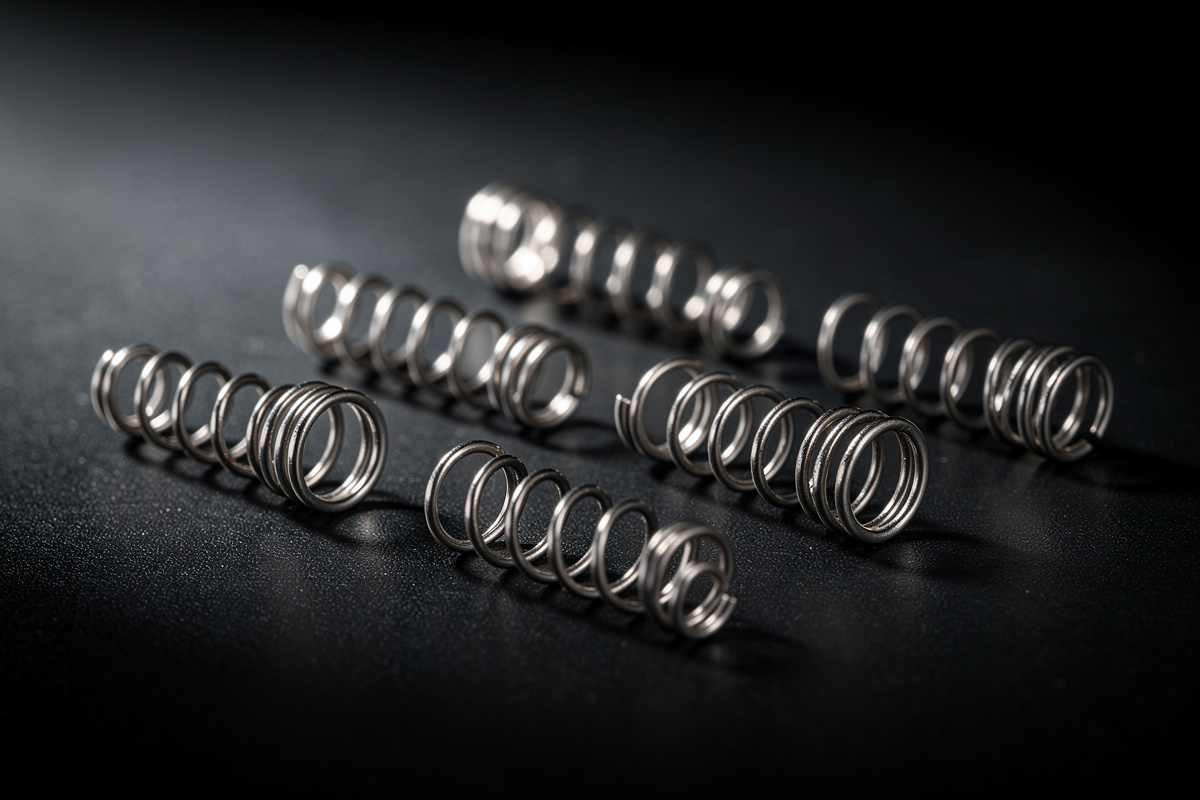
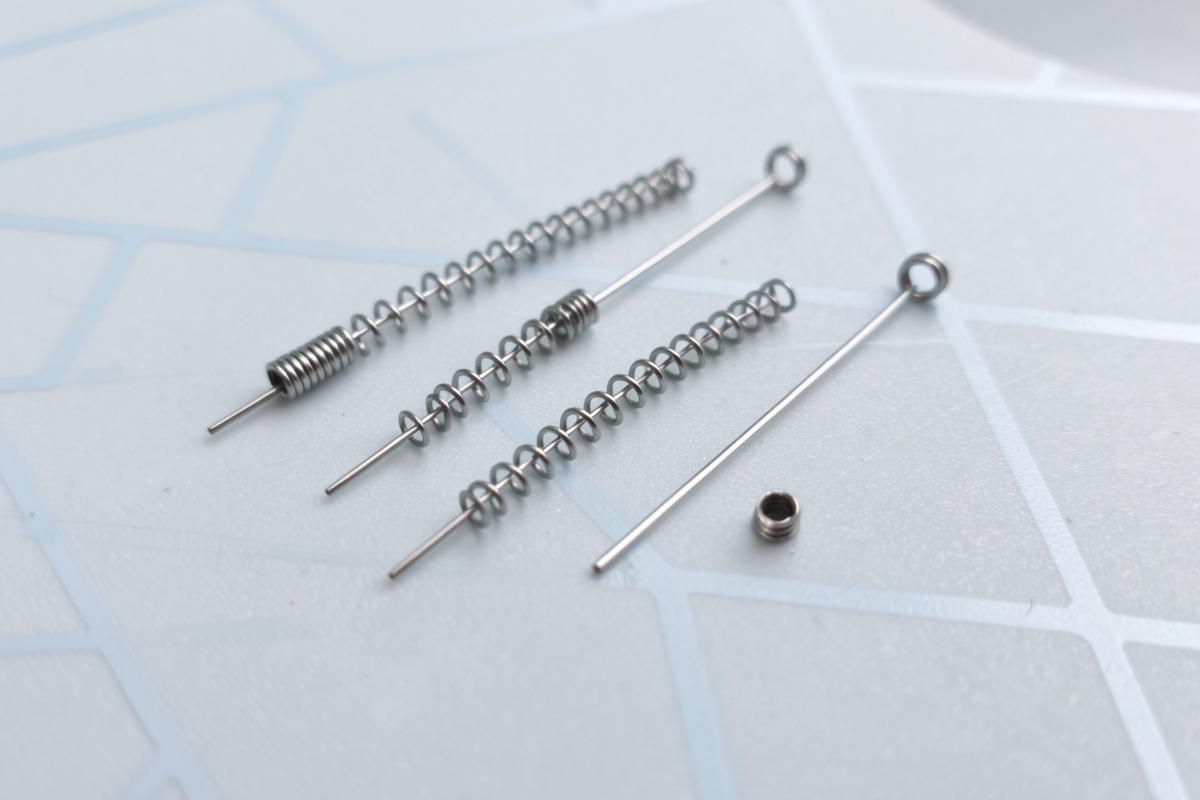
A keyboard switch spring is a small coil of metal that compresses every time you press the key. Like any spring, it has a natural resonant frequency, and when it compresses and rebounds it can ring — a high, thin, metallic tone layered on top of the normal keypress sound. That ring is spring ping. It’s most audible on switches with empty space under the plate for the sound to resonate into, and on certain springs more than others (longer and lighter springs tend to ring more).
The key insight: the ping is the spring vibrating, not the housing or the case. That’s why case foam doesn’t fix it — foam damps case resonance, but the spring is ringing inside a sealed switch. You have to address the spring itself.
Fix one: lube the springs you already have
The fastest, cheapest fix is to lube your existing springs. A light oil film on the coil damps the resonance so the ring drops or disappears. This is the move when your springs are otherwise fine — you like the weight, you just want the boing gone.
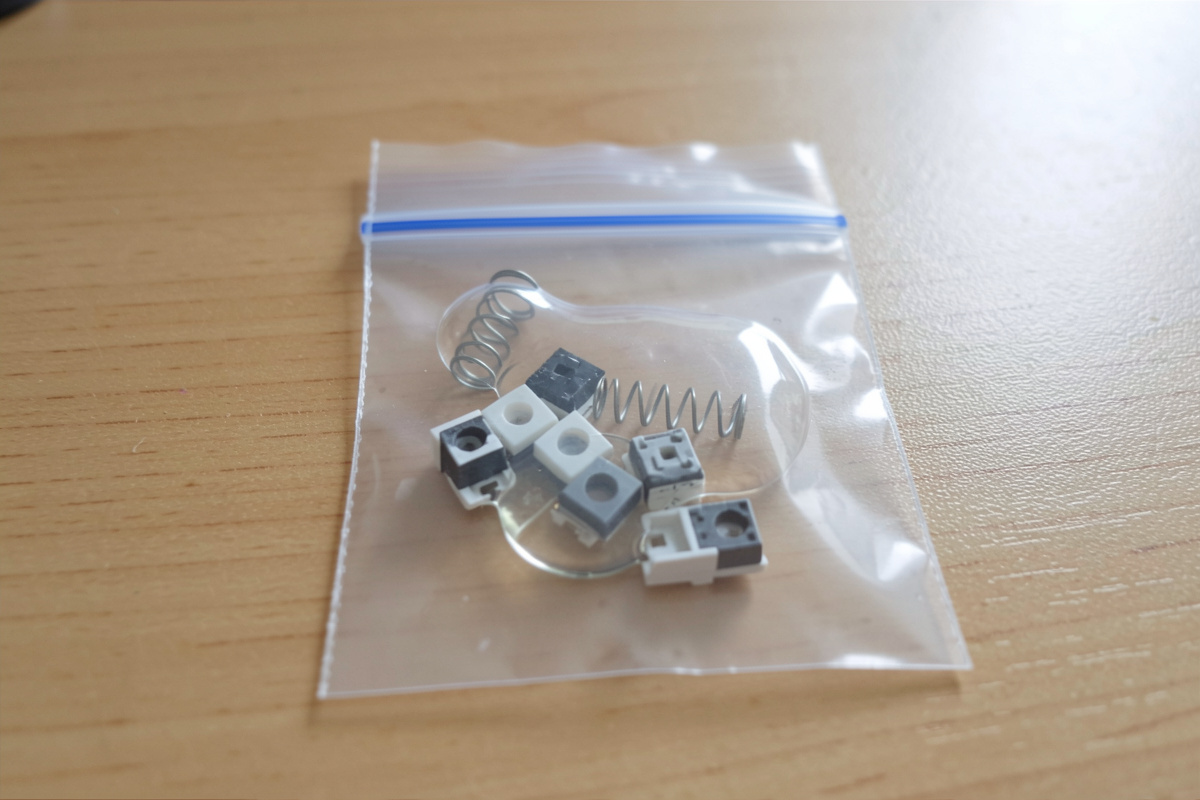
The cleanest method is bag-lubing: drop all your springs into a small zip bag, add a few drops of a thin lube, seal it, and shake until every spring has a light coat. It’s fast — you do an entire board’s worth of springs in one shake — and it avoids the tedium of dabbing each spring by hand. Pour them out onto a paper towel, let the excess settle, and install. The alternative is a tiny dab of lube on each end of each spring, which works but is far slower.
Use a thin oil for this, not a thick grease. Springs want a light damping film; a heavy grease can gum the coil and isn’t necessary. This is the one place in switch tuning where the thinnest product is the right one.
Fix two: swap to better springs
The other route is to replace the springs entirely. This makes sense when you want to also change the switch’s weight — ping fix and a feel change in one move. Springs come in different bottom-out forces and different lengths, and swapping them lets you tune actuation weight to taste.
Some springs are simply less prone to ping by design, and many aftermarket springs come pre-lubed, killing two birds at once. The trade-off versus lubing your existing springs is cost and effort: you’re buying parts and opening every switch to swap, whereas spring-lubing can sometimes be done with minimal disassembly. But if you’ve been wanting a different weight anyway, a spring swap delivers both.
| Lube existing springs | Swap to new springs | |
|---|---|---|
| Fixes ping | Yes | Yes |
| Changes weight | No | Yes (pick your force) |
| Cost | Lowest (a little oil) | Higher (buy springs) |
| Effort | Low (bag-lube the lot) | Medium (open + swap each) |
| Best when | You like the weight, just want quiet | You want a different feel too |
How to choose between them
The decision is genuinely simple once you frame it right: happy with the weight? Lube your springs. Want a different weight too? Swap them. There’s no smoothness or sound reason to prefer one over the other for the ping fix itself — both silence the ring. The swap just bundles a feel change you may or may not want.
My default, when a board pings but feels good otherwise, is to bag-lube the springs. It’s the least invasive, cheapest fix, and if I’m doing a full lube session anyway the springs get done as part of the process. I reserve spring swaps for when I genuinely want to retune the weight of a board, at which point killing the ping is a free bonus of the parts I’m installing. If your switches came with a factory lube job already applied, check whether factory-lubed switches are worth keeping as-is before you commit to opening them all.
What doesn’t fix ping (stop wasting time here)
- Case foam. Damps case resonance, not the spring. A pingy switch is still pingy in a foamed case.
- Plate foam. Same story — it changes the case sound profile but doesn’t reach the spring inside a sealed switch.
- Tape mod, PE foam, force-break mods. All sound mods that change the board’s character, none of which touch spring resonance.
- Lubing the rails only. Rail lube fixes scratch, not ping. The ping fix is specifically at the spring.
If you’ve tried any of these to kill a ping and it didn’t work, that’s not a failure of the mod — it’s that you used the wrong tool for the problem. Take the switches apart and address the spring, and the ping goes away.
How to confirm it’s actually ping before you start
Before you tear into a board, confirm you’re chasing ping and not some other sound. Ping has a signature: it’s high-pitched, metallic, and it rings after the keypress rather than during the bottom-out. It also tends to be uneven — a few keys ping louder than others, which is a dead giveaway it’s spring resonance and not a uniform case sound.
A quick test: press a few keys slowly and listen for the thin tail of ringing after the key bottoms out and starts to return. If you hear it, that’s spring. If instead you hear a hollow, boomy uniform sound across the whole board, that’s case resonance — a foam problem, not a spring problem, and the fixes in this guide won’t touch it. Getting this diagnosis right saves you from opening sixty switches to fix a problem that was actually in the case.
One more nuance: ping is often only obvious in a quiet room or with the keyboard close to your face. If a board pings under your nose at the desk but you can’t hear it in normal use, that’s worth weighing before committing to a full spring job — sometimes the honest answer is to leave it alone.
Some links below are affiliate links. As an Amazon Associate I earn from qualifying purchases — at no extra cost to you. I only point to gear I actually keep on my station.
To lube your existing springs, a thin spring lube is the one product you need — the bag-lube method takes minutes. If you’d rather swap, a set of replacement switch springs lets you fix ping and pick a new weight at once, and many come pre-lubed. Either way you’ll want a switch opener to get to the springs without a fight.
Frequently Asked Questions
What causes spring ping in keyboard switches?
Spring ping is the metal spring inside the switch resonating as it compresses and rebounds, producing a thin metallic ring layered over the keypress. It is most audible on switches with empty space under the plate and on longer, lighter springs. Crucially it comes from the spring itself, not the housing or case, which is why case foam does not fix it.
How do I fix spring ping?
Two ways, both targeting the spring. Lube your existing springs with a thin oil to damp the resonance, which is the cheapest fix and great if you like the current weight. Or swap to new springs, which kills ping and lets you change the actuation weight at the same time, often with pre-lubed springs that arrive quiet.
What is the easiest way to lube switch springs?
Bag-lubing. Drop all your springs into a small zip bag, add a few drops of thin lube, seal it, and shake until every spring has a light coat. You do a whole board of springs in one shake, then pour them out to let the excess settle before installing. Use a thin oil, never a thick grease, on springs.
Does case foam fix spring ping?
No. Case foam damps case resonance, but spring ping originates inside a sealed switch, so foam cannot reach it. A pingy switch stays pingy in a foamed case. Plate foam, tape mods, and rail lubing do not fix ping either. The only fixes are lubing or swapping the springs themselves.
Should I lube my springs or swap them to fix ping?
If you are happy with the switch weight and just want the ping gone, lube your existing springs — it is cheaper and less work. If you also want a different actuation weight, swap to new springs, which fixes ping and changes the feel in one move. Both silence the ring equally well; the swap simply bundles a weight change.