This information is for educational purposes. Keyboard work involves small parts, soldering irons, and electronics — work in a ventilated space when soldering, unplug boards before opening them, and modding a board may void its warranty. When in doubt, check the manufacturer's documentation first.
Krytox 205g0 is the linear lube; Tribosys 3203 is the tactile lube. That’s the whole answer compressed into one line — and almost everything else you read about this matchup is overcomplicating a decision that comes down to viscosity matched to switch type. I keep both on my station, I’ve run both on the same switches to feel the difference directly, and I’m going to give you the version that skips the brand worship and tells you which jar to reach for and why.
These two aren’t really competitors. They’re the two standard answers to two different questions, and the people agonizing over “which is better” are usually asking the wrong question. Better for what switch is the only version that has an answer.
What they actually are
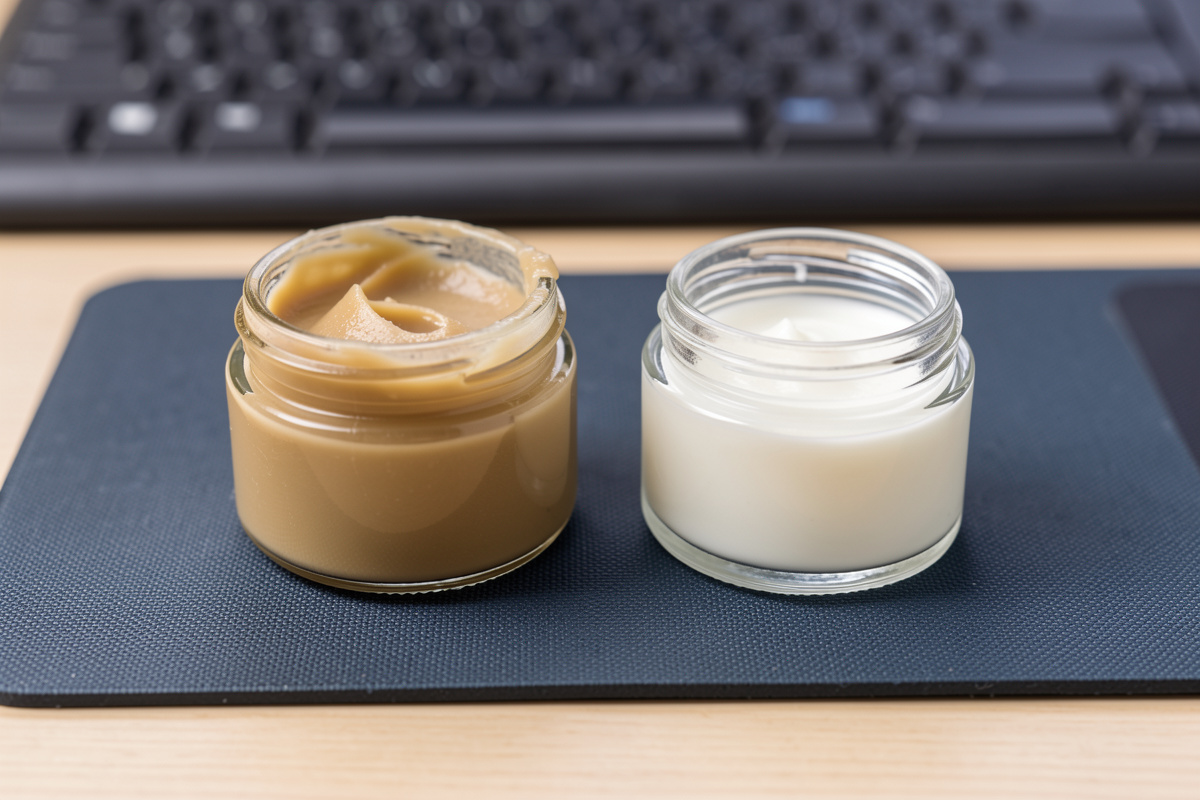
Krytox GPL 205 Grade 0 is a PTFE-thickened grease. “Grade 0” describes its consistency — thick enough to stay put on a sliding surface and build a durable film, thin enough to brush on without globbing if you’re careful. It’s the long-standing default for linear switches precisely because linears live or die on smoothness, and a durable grease on the rails is what delivers that.
Tribosys 3203 sits a step thinner. It behaves between a true oil and a light grease, which is exactly what a tactile switch wants: enough to cut scratch on the rails, not so much that it floods the bump and turns a crisp tactile into mush. It’s the standard tactile answer for the same reason 205g0 is the linear one — the viscosity fits the job.
The comparison that matters
| Krytox 205g0 | Tribosys 3203 | |
|---|---|---|
| Type | PTFE grease (Grade 0 consistency) | Lighter grease / heavy-oil blend |
| Viscosity | Thicker | Thinner |
| Best for | Linear switches (rails, housing) | Tactile switches (rails, light) |
| On a linear | Ideal — smooth, durable | Works, slightly less durable |
| On a tactile | Risks muting the bump | Ideal — smooth without killing snap |
| Springs | Fine, but most use a thinner oil | Fine for springs too |
| Forgiveness | Less (thicker = easier to overdo) | More (thinner self-levels a little) |
Read across the “on a tactile” row and you’ve got the real reason people are warned off using 205g0 on tactiles: it’s thick enough that an even slightly heavy hand rounds off the bump. On a linear that thickness is an asset; on a tactile it’s a liability. That single trade-off is the entire matchup.
Can you just use one for everything?
You can, and plenty of people do, but you’ll be compromising on one end. If you run only 205g0, your linears will be perfect and your tactiles will feel slightly muted unless you go very thin and skip the legs entirely. If you run only 3203, your tactiles will be perfect and your linears will be smooth but the lube film won’t last quite as long under heavy use, since a thinner lube on a high-friction sliding surface wears faster.
My honest take: if you only build one type of switch, buy the matching lube and ignore the other. If you build both linears and tactiles — which most people eventually do once the switch drawer grows — owning both is cheap and removes the compromise. These aren’t expensive, and a single jar of each lasts an enormous number of switches because you’re applying paper-thin coats.
What about springs?
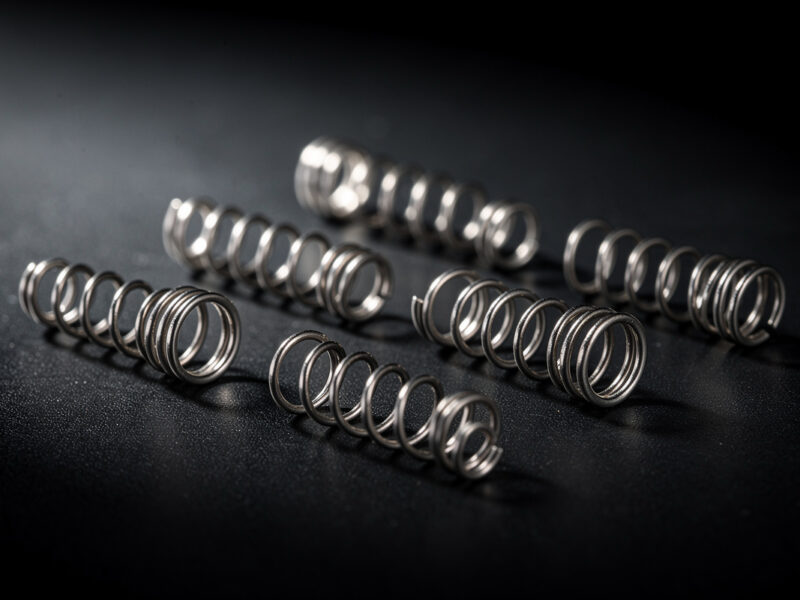
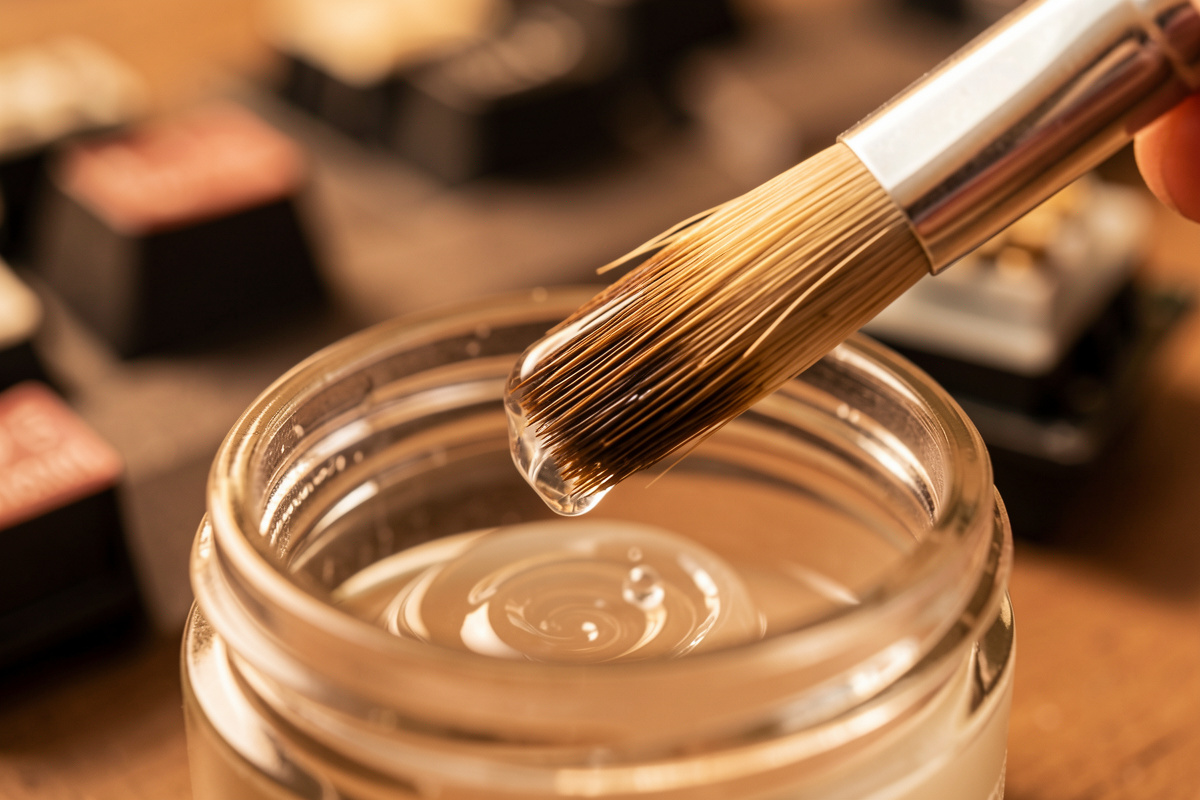
Neither of these is the ideal spring lube, strictly speaking. Springs want a light oil that damps the ping without gumming up the coil, and a dedicated thin spring oil does that best. That said, both 205g0 and 3203 can lube a spring fine if you bag-lube lightly — 3203’s lower viscosity makes it the easier of the two for springs. The point worth remembering: springs are the place a thinner product belongs, which is the opposite of the rails on a linear.
How much you actually use (and why a jar lasts forever)
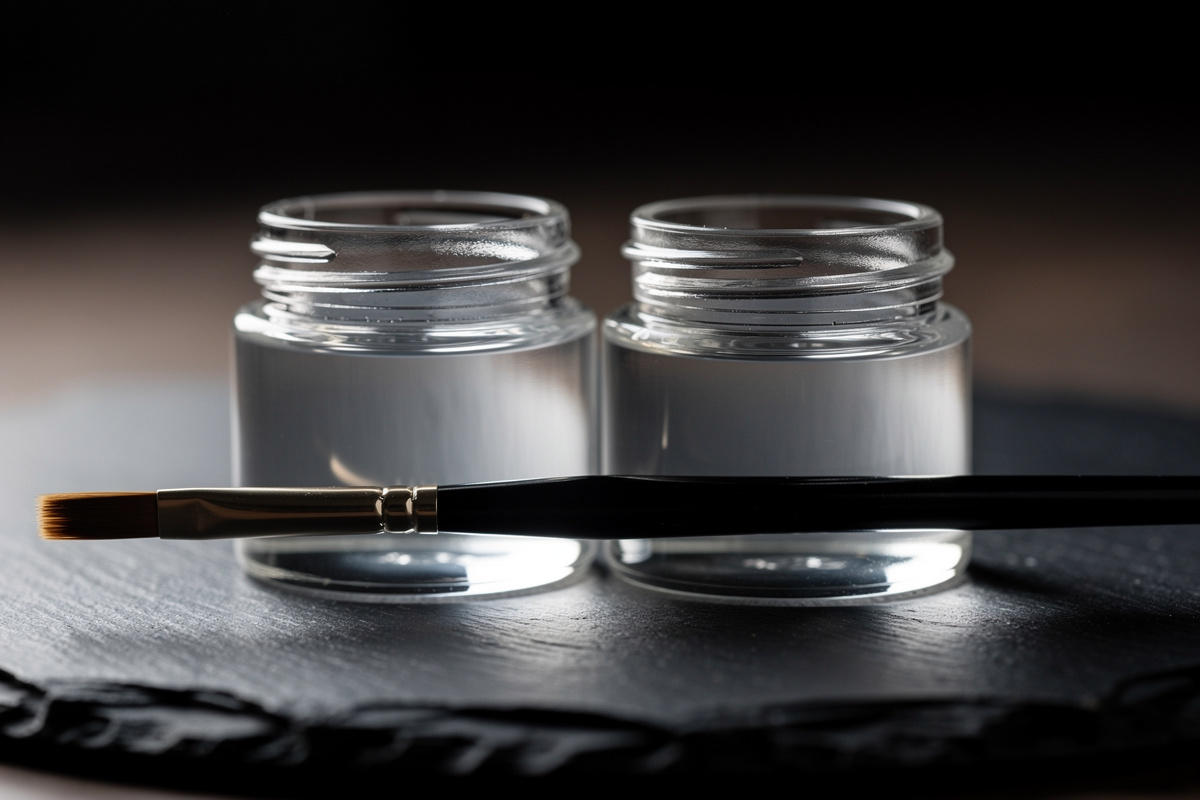
People new to lubing buy a jar and worry it’ll run out mid-board. It won’t. A correct application is a sheen — you load the brush, wipe most of it off, and lay down a film so thin it just catches the light. At that rate, a single small jar of 205g0 or 3203 covers hundreds of switches, often more. I’ve worked through far fewer jars than the number of switches I’ve processed would suggest, precisely because the right amount is so little.
This matters for the buying decision because it reframes “do I need both.” If a jar lasts that long, the cost-per-switch of owning both lubes is trivial. The expensive mistake isn’t buying two lubes — it’s buying one, using it on the wrong switch type, and being disappointed enough to give up on lubing entirely. Match the viscosity, use almost none of it, and one purchase serves you for years of builds.
The flip side: if you find yourself going through lube fast, that’s the tell you’re applying too much. Heavy application doesn’t just waste lube — it slows the switch and mutes the feel. Running out quickly is a symptom worth diagnosing, not just a restocking problem.
The brand-worship trap
There’s a cottage industry of “is X actually better than Y” content around switch lube that treats these jars like single-malt scotch. Here’s the deflating truth: applied correctly to the right switch, the difference between a perfectly-lubed 205g0 linear and the same switch with another reputable comparable grease is far smaller than the difference between a thin coat and a thick one. Technique dominates lube choice. If you’re just starting out with custom keyboards and want to understand where lubing fits in the full build process, the first custom keyboard guide maps the whole path from buying decisions to your first finished board. A perfect application of a “lesser” lube beats a sloppy application of the “best” lube every time.
So pick the right viscosity for your switch type, apply it thin and even, and stop reading comparison threads. The jar matters far less than your brush hand.
Some links below are affiliate links. As an Amazon Associate I earn from qualifying purchases — at no extra cost to you. I only recommend lubes I keep on my own station.
For linears, get Krytox 205g0 switch lube. For tactiles, Tribosys 3203 switch lube. And whichever you choose, a separate thin spring lube is the cleanest way to kill ping. A jar of each lasts hundreds of switches at the thin coats you should be using.
Frequently Asked Questions
Should I use Krytox 205g0 or Tribosys 3203?
Use Krytox 205g0 for linear switches and Tribosys 3203 for tactile switches. 205g0 is a thicker grease that delivers durable smoothness on linear rails, while 3203 is thinner so it smooths a tactile without drowning the bump. The choice is about matching viscosity to switch type, not about one being universally better.
Can I use Krytox 205g0 on tactile switches?
You can, but it is risky. 205g0 is thick enough that a slightly heavy application rounds off and mutes the tactile bump, which is the opposite of what you want. If you only own 205g0, apply it extremely thin to a tactile and skip the stem legs entirely. The thinner Tribosys 3203 is the safer tactile choice.
Is Tribosys 3203 good for linear switches?
It works and feels smooth, but it is thinner than ideal for a high-friction linear rail, so the film does not last as long under heavy use as a thicker grease like 205g0. For linears that see a lot of typing or gaming, the thicker 205g0 is the more durable choice.
Do I need both lubes?
Only if you build both linear and tactile switches. If you only run linears, buy 205g0 and ignore the rest. If you run both types, owning both removes the compromise and is inexpensive because each jar lubes hundreds of switches at the thin coats you should be applying.
Does the brand of lube really matter?
Far less than technique. Matching viscosity to switch type and applying a thin, even coat matters more than which reputable lube you choose. A perfect application of a comparable grease beats a sloppy application of the most hyped jar every time. Pick the right viscosity, apply it thin, and stop agonizing over the brand.
What lube should I use on switch springs?
Springs want a light oil that damps ping without gumming the coil, so a dedicated thin spring lube is best. Of the two greases here, Tribosys 3203 is the easier to use on springs because it is thinner. The principle is that a thinner product belongs on springs, the opposite of what you want on a linear rail.
Further Reading
- Switch lubing and filming: the complete guide
- Is lubing switches worth it — the honest math
- Switch spring ping fix — killing the boing at the source
- Switch lube station setup — the batch workflow