This information is for educational purposes. Keyboard work involves small parts, soldering irons, and electronics — work in a ventilated space when soldering, unplug boards before opening them, and modding a board may void its warranty. When in doubt, check the manufacturer's documentation first.
Long pole switches are mechanical switches with a longer stem pole — the central post that strikes the bottom housing — which shortens total travel to roughly 3.3mm versus the standard 4.0mm and produces a deeper, snappier bottom-out sound. They have taken over the “thock” enthusiast space for one reason: that firmer, earlier landing is what makes the satisfying low sound people chase.
I keep several long pole linears in the drawer alongside their standard-pole equivalents, because long pole is the one modifier where you can hear the difference instantly on the same mic, same distance, same desk. It is also the most over-hyped switch trait of the last two years, so this is the build-honest breakdown: what a longer pole actually changes, what it does not, and whether the sound everyone wants survives contact with a stock board.
What Are Long Pole Switches?
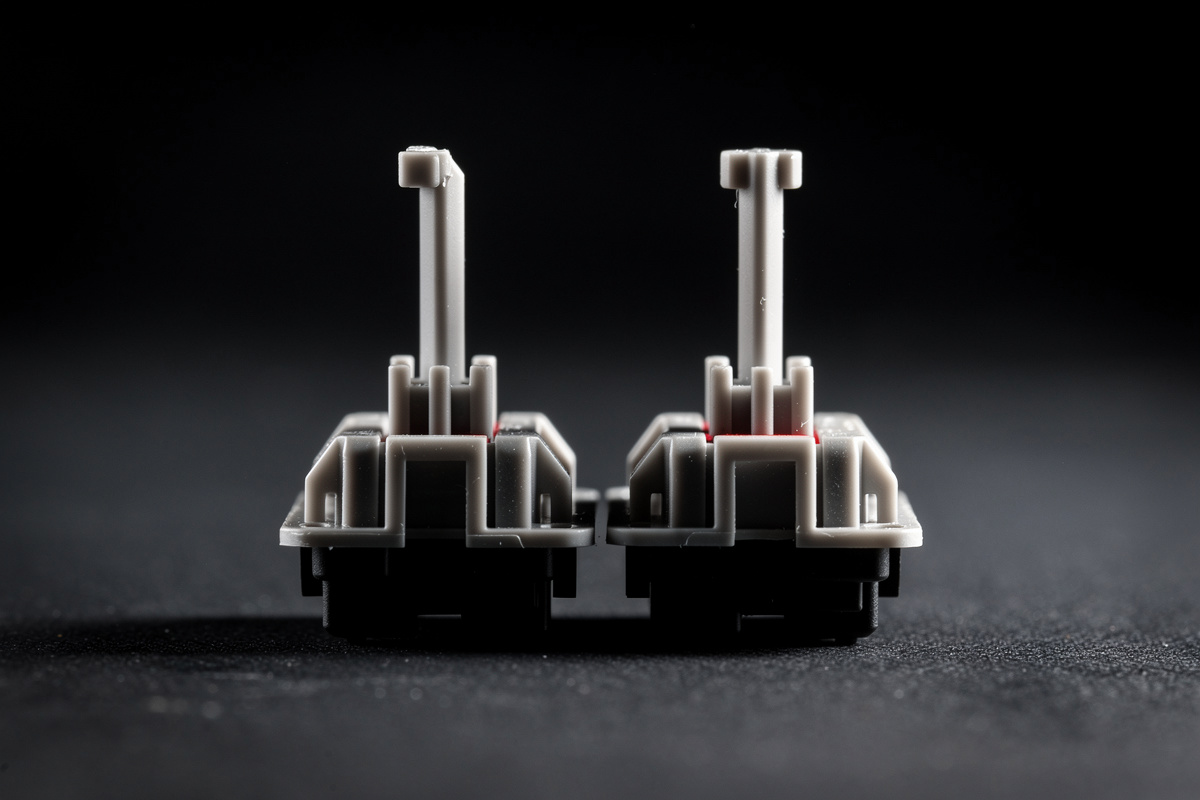
Long pole switches have an extended center pole on the stem, so the stem bottoms out against the housing earlier in the keystroke — around 3.3mm of travel instead of the usual 4.0mm. The actuation point and spring weight are usually unchanged (still around 45-50g for a long pole linear); only the bottom-out distance and the resulting impact sound differ. It is a stem modification, not a new switch family — a long pole linear is still a linear.
The first time I dropped a long pole linear next to a standard-pole version of the same switch, the actuation felt identical until the bottom — then the long pole landed sooner and harder, with a noticeably deeper “clack.” That earlier, firmer collision between a longer plastic pole and the housing floor is the entire mechanism. Everything marketers say about long pole switches traces back to that one geometric change.
Why Do Long Pole Switches Sound Deeper?
Long pole switches sound deeper because the longer pole strikes the housing with a firmer, more sudden impact over a shorter travel, producing a lower-pitched, snappier bottom-out than the softer landing of a standard pole. The shortened travel concentrates the energy of the keystroke into a crisper collision, which the ear reads as “thock” rather than the higher “clack” of a longer, gentler landing.
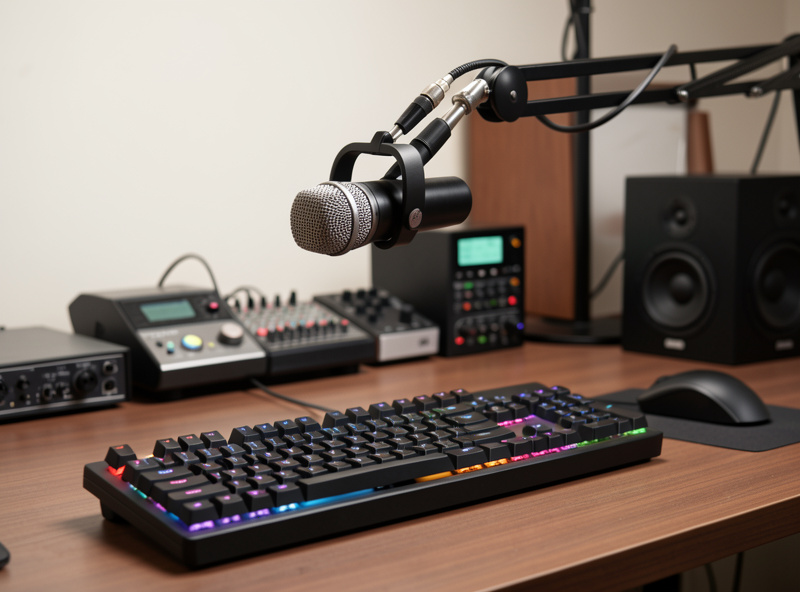
Here is the honest caveat I always add: the switch is only one ingredient in that sound. Recorded on my controlled rig — one mic, one distance, one desk — a long pole switch in a foam-modded gasket board sounds dramatically deeper than the same switch in a stock plate-mount board. The pole gives you a head start toward thock, but the case, the plate, the mounting style, and any foam do at least as much work. Buying long pole switches expecting the YouTube sound out of your stock board is the most common disappointment in this corner of the hobby.
The keycaps surprise people too. Thick PBT caps deepen and round the bottom-out, while thin ABS caps let more of the high-frequency click through, so the exact same long pole switch can read as “thocky” under one set and “clacky” under another. On my rig I have swapped only the keycaps between two otherwise identical recordings and heard the pitch shift enough that someone listening blind would have guessed they were different switches. This is why I distrust any long pole sound test that does not state the keycaps, the case, and the mounting — the pole is maybe a third of what you are hearing. If deep sound is the whole reason you want long pole, budget for the foam, the caps, and the case too, because the switch alone will get you partway and no further.
Are Long Pole Switches Better Than Standard?
Long pole switches are not better, just different — they trade travel and a softer landing for a deeper sound and a firmer, earlier bottom-out. If you love that snappy low sound and do not mind the shorter 3.3mm travel, they are excellent. If you prefer a longer, cushioned keystroke or you bottom out hard and want the housing to absorb the impact gently, a standard pole is the better choice for your hands.
The shorter travel is the trade people underestimate. A 3.3mm bottom-out arrives sooner than your fingers may expect coming from standard switches, and for a hard bottom-out typist like me that firmer, earlier wall can feel harsh over a long day if the switch is also heavy. I run long pole switches happily, but I keep them on the lighter side and lubed, because a heavy unlubed long pole is a fast route to fingertip fatigue. Match the modifier to your typing style, not to a sound clip. If you want to hear it for yourself, a single pack of long pole linears is a cheap experiment next to a whole new board.
As an Amazon Associate I earn from qualifying purchases.
Do Long Pole Tactiles Exist, or Just Linears?
Long pole tactiles do exist, but they are far rarer than long pole linears, because the trait is prized mainly for the deep linear bottom-out sound and the tactile bump complicates that acoustic goal. Most switches marketed as long pole are linears, and that is where the modifier makes the most sense — a smooth travel ending in a firm, deep landing.
I have a couple of long pole tactiles in the drawer, and the honest verdict is that they are a niche-within-a-niche. The tactile bump gives your finger feedback partway down, and then the long pole gives a firm landing — two distinct events in one keystroke. Some typists love that combination; others find it busy. If you are drawn to long pole for the sound, start with a linear, because that is where the deep bottom-out reads cleanest. If you already love tactiles and want a snappier floor, a long pole tactile is worth a small experiment, but do not expect it to be the default the way long pole linears have become. There is also a stem-wobble angle worth knowing: a longer pole gives the stem slightly more leverage against the housing, so a long pole switch with loose tolerances can feel a touch wobblier at the top of the stroke than its standard-pole sibling, which is one more reason I lean toward the better-known linear lines when I buy long pole rather than gambling on an unfamiliar house switch.
Do Long Pole Switches Need Lubing?
Long pole switches benefit from lube just like any switch, but the bottom-out sound they are prized for can be slightly muted by heavy lube on the pole and housing floor. The trick is to lube the rails for smoothness while keeping the pole-strike area lighter, so you remove scratch and spring ping without cushioning the very impact that makes a long pole switch sound good. It is a more careful job than lubing a standard linear.
On my lube station I treat long pole switches as a deliberate balance: a thin coat on the rails kills the scratch, but I keep grease off the bottom of the housing where the pole lands. Over-lube that landing zone and you have spent money on long pole switches just to dampen the one thing they do well. If your goal is the deepest possible sound, lube conservatively; if you care more about smoothness than maximum thock, lube normally and accept a slightly softer bottom. There is no single right answer — it depends which trait you bought them for.
Frequently Asked Questions
What is the point of long pole switches?
Long pole switches shorten total travel to about 3.3mm and create a deeper, snappier bottom-out sound. The point is the acoustic result, the low thock that enthusiasts prefer, plus a firmer, earlier landing. The actuation weight usually stays the same as a standard switch.
Do long pole switches actually sound better?
They sound deeper, which many people prefer, but the case, plate, mounting style and foam matter as much as the switch. A long pole switch in a stock plate-mount board will not match the deep sound it makes in a foam-modded gasket build, so the switch alone is not the whole story.
What is the travel distance of long pole switches?
Long pole switches typically have around 3.3mm of total travel, compared to the standard 4.0mm. The longer center pole strikes the housing earlier, which is what both shortens the travel and produces the firmer, deeper bottom-out sound they are known for.
Are long pole switches good for typing?
They can be, but the shorter 3.3mm travel and firmer landing suit people who like a snappy bottom-out more than those who want a cushioned keystroke. Heavy bottom-out typists may find a heavy long pole harsh over long sessions, so keeping them lighter and lubed helps.
Should you lube long pole switches?
Yes, but carefully. Lube the rails for smoothness while keeping grease off the bottom of the housing where the pole lands, since heavy lube there can mute the deep bottom-out sound that long pole switches are bought for. Conservative lubing preserves both smoothness and sound.