This information is for educational purposes. Keyboard work involves small parts, soldering irons, and electronics — work in a ventilated space when soldering, unplug boards before opening them, and modding a board may void its warranty. When in doubt, check the manufacturer's documentation first.
Switch actuation weight is the gram force needed to press a switch to its registration point, and it is the single spec that most changes how a keyboard feels day to day — far more than the brand on the box. Common switches run from about 35g (very light) to 67g and beyond (heavy), and the right number for you depends almost entirely on whether you type by floating over the keys or slamming them to the bottom.
I run mid-weight springs on almost everything, and I got there by being wrong first. Early on I chased the 35g featherweights that every speed-typing video raves about, built a whole board with them, and had hand fatigue by hour six because I am a hard bottom-out typist who was crashing into the floor on every key. Choosing actuation weight well is about knowing your own hands, and this is the build-honest guide to doing that instead of buying the number a stranger likes.
What Is Switch Actuation Weight?
Actuation weight is the force, measured in grams, required to push a switch down far enough to register a keystroke. It is measured at the actuation point — usually around 2mm into a 4mm total travel — not at the bottom. A switch labeled “45g” actuates at 45 grams of force, but the spring keeps getting firmer past that point, so the force at full bottom-out is always higher.
This distinction trips up nearly everyone. The number on the spec sheet is the actuation figure, but unless you stop your finger exactly at the actuation point (almost nobody does), it is not the force you actually feel. Understanding what the number means is the first step to picking a switch that fits your hands rather than the marketing.
Actuation Weight vs Bottom-Out Force: What’s the Difference?
Actuation force is what it takes to register a keypress; bottom-out force is what your finger hits when you slam the key all the way down, and it is always higher. A “45g” linear typically bottoms out around 55-65g, while a “67g” heavy switch can bottom out near 75-80g. If you bottom out every key, the bottom-out force is what you feel all day, not the actuation number.
This is why two switches with the same actuation rating can feel completely different: their springs ramp up at different rates, so the bottom-out forces diverge. I am a bottom-out typist, so I read the bottom-out figure first and treat the actuation number as secondary. Floaters who release at the actuation point experience the opposite — for them the actuation number is the real feel and the bottom-out is irrelevant. Knowing which kind of typist you are is the whole game.
How to Know If You’re a Light or Heavy Typist
You are a heavy bottom-out typist if you can feel your fingers hitting the bottom of the keys with a thud; you are a light floater if you barely touch down and release as soon as the key registers. The simplest test: type a paragraph normally and notice whether you feel the floor on most keys. Heavy typists feel it; light typists do not. This single observation predicts your ideal weight better than any review.

I figured mine out by paying attention to the sound: a hard bottom-out typist on a stock board makes a loud, consistent clack on every key because the stems are slamming the housing, and that was unmistakably me. If you are a heavy typist, a slightly firmer spring (50-62g) cushions the slam and protects your fingers over a long day. If you float, a lighter spring (40-45g) feels effortless and fast. Forcing the wrong weight on yourself is the fastest route to fatigue.
There is also a middle group, and most people are in it: typists who bottom out some keys hard (the index fingers, the spacebar) and float others. For that group I steer toward the 50g range, because it is firm enough to cushion the keys you hammer without feeling heavy on the keys you tap lightly. The reason the 45-50g band dominates stock boards is exactly this — it is the safest bet for hands you have never met. You only need to deviate once you have spent real time typing and noticed your hands pulling you lighter or heavier. Trust the feel you observe over weeks, not the number a reviewer with different hands swears by.
What Actuation Weight Should You Choose?
Most people are happiest in the 45-50g range, which suits the widest variety of typing styles and is why so many stock boards ship there. Go lighter (35-45g) if you are a confirmed floater who values speed and effortless presses; go heavier (60-67g+) if you are a heavy typist who wants the spring to push back and reduce accidental keypresses. The extremes are for people who already know their preference.
The honest advice is to not commit to an extreme weight on your first board. A switch tester with a spread of weights costs less than one 90-pack and lets you feel 35g, 45g, and 67g back to back. Once you know your number, you can even buy your favorite switch and swap in different springs — spring weight is independent of the switch family, so a 62g spring turns a light linear into a heavy one without changing anything else. Picking the switch family is one decision; the spring is the one that actually fits your hands, and it is the more important of the two for comfort.
Can You Change a Switch’s Actuation Weight?
Yes — swapping the spring inside a switch changes its weight without changing anything else, and aftermarket springs are sold in graded weights specifically for this. A spring swap turns a 45g linear into a 62g linear in about a minute per switch, keeping the same stem feel and sound profile. It is tedious across a full board but completely doable, and it is how serious builders dial in exactly the weight they want.
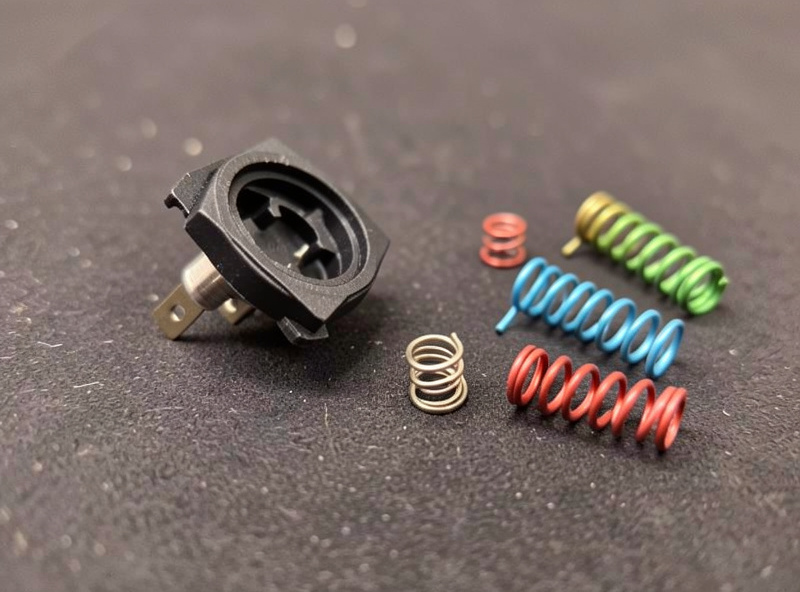
I have done spring swaps on a few boards when I liked a switch’s feel but wanted it firmer, and the only real cost is time and the patience to do 70+ switches. A thin coat of spring lube while you are in there kills any spring ping at the same time. If you are not ready to swap springs, the simpler path is to just buy the switch in the weight you want — most popular switches come in multiple spring options precisely because weight is the most personal variable in the hobby.
If you do go the spring-swap route, two things I learned the slow way. First, buy a graded spring kit rather than a single weight, because the weight that looks right on paper rarely matches what your fingers want once they are in a real board under real keycaps — having 55g, 58g, and 62g on hand lets you test a few keys before you commit seventy switches to one number. Second, springs are not all linear in how they ramp: a “two-stage” or progressive spring starts light and firms up sharply near the bottom, which feels completely different from a standard spring of the same rated weight even though the box says the same gram figure. I keep a small drawer of springs the same way I keep a drawer of switches, because once you accept that weight is the variable that actually fits your hands, the spring becomes the cheapest, most precise tuning knob in the whole hobby. A bag of springs costs less than a single premium switch set and changes the feel more.
As an Amazon Associate I earn from qualifying purchases.
Frequently Asked Questions
What is a good actuation weight for typing?
For typing, 45 to 55 grams suits most people, giving enough resistance to avoid accidental presses while staying comfortable over long sessions. Heavy typists may prefer 60 grams or more for a firmer push-back. Light floaters can go down to 40 grams for an effortless feel.
Is 45g or 67g better for switches?
Neither is better universally. 45 grams feels light and fast, ideal for floaters and gaming. 67 grams feels firm and deliberate, better for heavy typists who want resistance and fewer accidental keypresses. The right choice depends on whether you slam keys or float over them.
Does actuation weight affect typing speed?
Slightly, but less than people think. Lighter switches register faster and feel quicker, but accuracy matters more than raw weight for real speed. A heavy typist on too-light switches makes more typos, which slows them down more than a slightly firmer spring ever would.
Why do my fingers get tired on light switches?
If you bottom out every key, light switches let your fingers crash into the housing with no spring resistance to cushion the slam, which fatigues your hands. A firmer spring of 50 to 62 grams pushes back and softens the bottom-out, often feeling less tiring despite being heavier.
Can I make my switches heavier or lighter?
Yes, by swapping the spring inside each switch. Aftermarket springs come in graded weights, so you can turn a 45 gram switch into a 62 gram switch in about a minute each without changing the stem or housing. It is tedious across a full board but fully doable.