This information is for educational purposes. Keyboard work involves small parts, soldering irons, and electronics — work in a ventilated space when soldering, unplug boards before opening them, and modding a board may void its warranty. When in doubt, check the manufacturer's documentation first.
Switch break in is real for some switch traits and placebo for most of the dramatic claims you read online. Typing on switches thousands of times does smooth out microscopic plastic burrs and redistribute factory lube slightly, which can take the edge off scratch — but it does not transform a bad switch into a great one, and the “100,000 keystrokes and they sound completely different” stories are mostly expectation talking. The honest answer is: small real effect, large imagined one.
I have typed identical switches into the ground on my daily driver while keeping a sealed pack of the same batch as a control, and that side-by-side is the only way to separate real break-in from your brain wanting the switch you spent money on to improve. Same batch, same board, same mic and distance when I record them — the controlled comparison my whole bench runs on, because uncontrolled before-and-after impressions are exactly where placebo hides. This is the build-honest breakdown of what actually changes when you “break in” switches, what does not, and why lubing does in an evening what break-in supposedly does over months.
Is Switch Break In Real or Placebo?
Switch break in is partly real and largely placebo: heavy use can slightly smooth stem-to-housing contact and spread factory lube, producing a marginal reduction in scratch over thousands of presses, but the large feel and sound transformations people describe are mostly perceptual. Your hands adapt to a switch and your expectation fills in improvement that is not measurably there. The real physical change is small; the perceived change is often large.
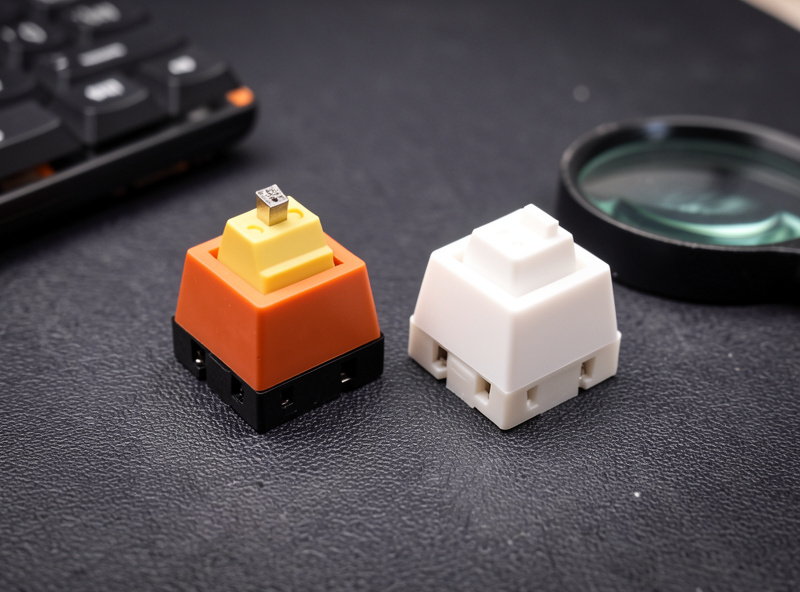
The trap is that both things are true at once — there is a tiny real effect, which gives the placebo something to anchor to. When I compared my heavily-used switches to the sealed control from the same batch, the used ones were very slightly smoother on the worst keys, but nothing like the night-and-day difference forum posts promise. If a switch felt scratchy and harsh out of the box, months of typing left it a slightly-less-scratchy version of the same switch, not a different one.
What Actually Changes When You Break In Switches?
What changes is microscopic: tiny molding burrs on the stem rails wear down with use, and the thin factory lube (if any) redistributes across the contact surfaces, both of which can slightly reduce scratch. What does not change is the spring weight, the actuation force, the travel distance, the housing material, or the fundamental character of the switch. A linear stays linear; a 67g switch stays 67g; a hollow-sounding switch stays hollow.
This matters because people break in switches hoping to fix the wrong things. Break-in cannot make a switch quieter in any meaningful way, cannot remove spring ping, and cannot change the pitch of the bottom-out — those are functions of materials and design, not wear. The only trait genuinely in play is scratch, and even there the effect is modest. If your switch’s problem is anything other than mild scratch, no amount of typing will solve it.
It is worth being precise about why scratch is the only real candidate. Scratch comes from imperfections where the moving stem drags against the housing rails — leftover flash from the injection mold, slightly rough surfaces, or uneven factory lube. Those surfaces can polish very slightly with repeated contact, which is genuine wear. But the spring’s force curve, the length of the pole, the thickness of the housing walls, and the plastic blend that determines sound are all fixed at manufacture and entirely unaffected by use. Knowing which category your complaint falls into tells you instantly whether break-in could ever help: scratch, maybe a little; anything else, never.
Does Lubing Beat Breaking In?
Yes — lubing does in one evening what break-in supposedly does over months, and far more completely. A thin coat of switch lube eliminates scratch and spring ping immediately and dramatically, where break-in only nibbles at scratch slowly and partially. If your goal is a smoother switch, lubing is the direct, controllable, vastly more effective route; break-in is the slow, uncertain version of a worse outcome.
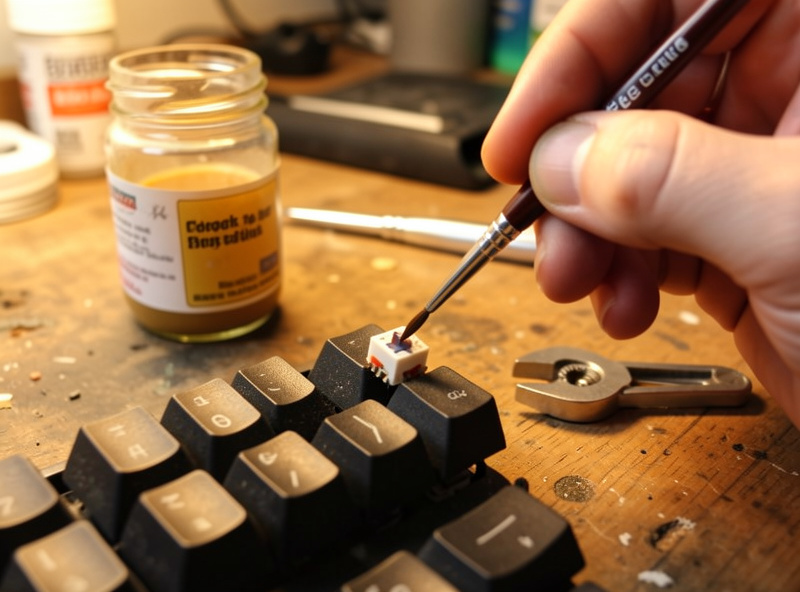
This is why I tell people not to bother “breaking in” switches as a deliberate strategy. If a switch is scratchy enough to bother you, a little switch lube makes the problem gone tonight, no waiting required. The same-switch-tuned-versus-stock comparison I run on every switch makes this obvious: the lubed version is transformed in minutes, while the broken-in stock version is, months later, marginally improved at best. Time is not a tuning tool the way grease is. Break-in is what happens to switches you use; it is not a process worth pursuing on purpose.
There is one honest exception worth naming: if you genuinely do not want to lube — no opener, no patience for it, no interest in spending evenings on switches — then ordinary daily use is the only smoothing your switches will ever get, and over weeks it will take a little of the worst edge off. That is fine. Just buy the smoothest stock switch you can in the first place, because you are not going to tune your way out of a scratchy one, and break-in will not do it for you. For everyone willing to lube, break-in is irrelevant; for everyone who refuses to, the switch you buy is the switch you keep, lightly smoothed at best.
How Long Does Switch Break In Take?
The smoothing from break-in, to the extent it is real, accumulates over thousands of keystrokes — typically weeks of normal daily typing rather than days, and the curve flattens quickly. The biggest perceptual change happens in the first week or two as your hands adapt, while the actual physical smoothing of the stem rails is slow, modest, and largely done within the first month of regular use. After that, additional typing changes essentially nothing you can feel.
People sometimes quote specific keystroke counts as if there is a finish line where switches suddenly transform. There is not. Plastic-on-plastic wear at the gentle forces inside a keyboard switch is glacial — these are not metal bearings under load, they are light springs pushing molded plastic past molded plastic a few millimeters at a time. On my daily driver the switches I have used most are very slightly smoother than fresh ones from the same batch, but I could not tell you the keystroke at which that happened because it was gradual and small. If someone tells you their switches “broke in” at exactly some round number of presses and changed dramatically, that is a story, not a measurement. The honest version is: most of what you will ever notice happens in the first couple of weeks, and most of that is adaptation.
Should You Wait to Mod New Switches?
No — there is no reason to wait before lubing, filming, or modding new switches, because break-in does not meaningfully improve them and waiting only delays the real improvement that tuning provides. Some people believe you should “let switches break in first” before lubing, but since lubing addresses the same scratch that break-in slowly nibbles at, lubing immediately is strictly better. There is no benefit to typing on scratchy stock switches for weeks first.
I lube new switches the same evening they arrive if I plan to lube them at all, and I have never once wished I had let them break in first. The stem rails are not going to wear into some special state that changes how lube behaves — a thin coat of grease on a fresh switch performs exactly as well as on a used one. The only reason to type on switches stock for a while is to decide whether you even like them before investing the hours to tune; that is a preference decision, not a break-in requirement. If you already know you are keeping a switch, there is no waiting period. Tune it now.
Why Do People Believe in Switch Break In?
People believe in switch break in because of a combination of genuine small smoothing, hand adaptation, and the powerful expectation that something you invested time and money in must be getting better. After a few weeks your fingers learn the switch’s exact actuation point and rhythm, which feels like the switch improving when it is actually you improving at the switch. The brain is very good at confirming what it hopes is true.
I am not dismissing the experience — switches genuinely do feel better after a few weeks of use, and that feeling is real even when the cause is mostly adaptation rather than the switch changing. The point is just to set expectations honestly so you do not buy a switch you dislike hoping break-in will rescue it. It will not. If you love a switch on day one, you will love it more as your hands settle; if you hate it on day one, break-in will not change your mind, and you should sell it or relegate it to the drawer rather than waiting for a transformation that is not coming.
As an Amazon Associate I earn from qualifying purchases.