This information is for educational purposes. Keyboard work involves small parts, soldering irons, and electronics — work in a ventilated space when soldering, unplug boards before opening them, and modding a board may void its warranty. When in doubt, check the manufacturer's documentation first.
The screw-in vs plate-mount stabilizers question comes up the moment someone realizes their board’s rattle might be the mount, not just the tune. I’ve built and tuned both extensively — my self-soldered aluminum 65% runs screw-ins, my value-reference hotswap and stock budget 60% run plate-mounts — and recorded them the same way every time. Here’s the honest comparison, including the answer most guides skip: which one you should actually care about, and when the difference is real versus marketing.
For the full tuning context this fits into, the stabilizer tuning guide is the hub. This page is specifically about the mounting decision.
The three mounting styles, quickly
There are really three, not two, and lumping the middle one in confuses the comparison:
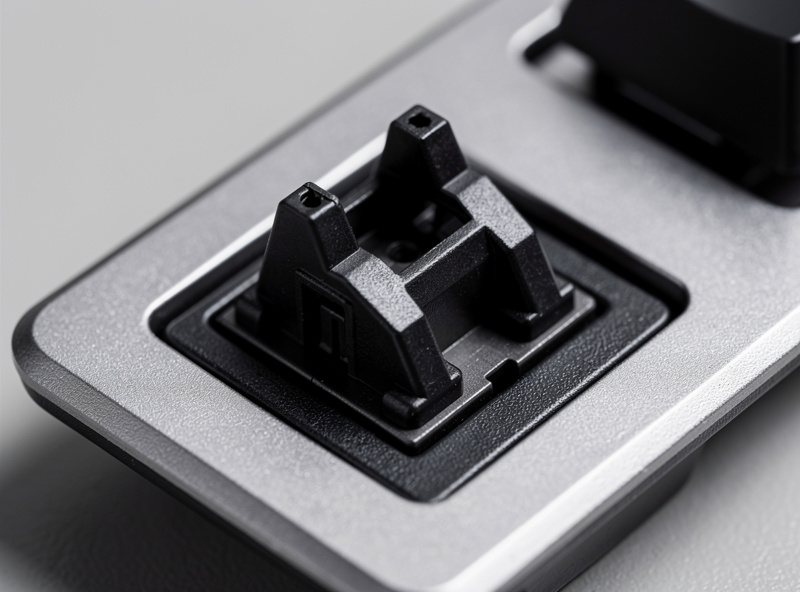
- Plate-mount clips into cutouts in the plate. Installs and removes from the top, no PCB removal. Standard on budget and prebuilt boards because it’s cheap to assemble.
- Clip-in PCB-mount snaps into the PCB rather than the plate. Flatter and more stable than plate-mount, but still clips rather than bolts, so it can wiggle if clips are loose.
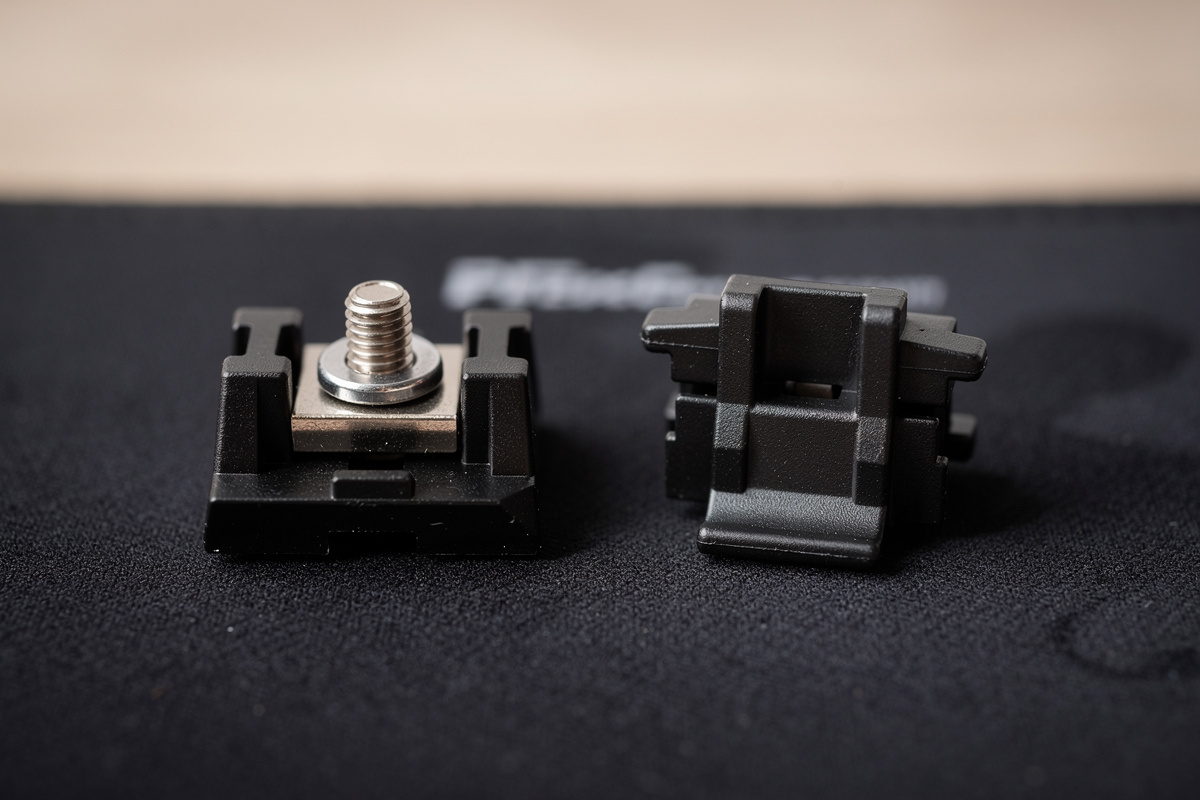
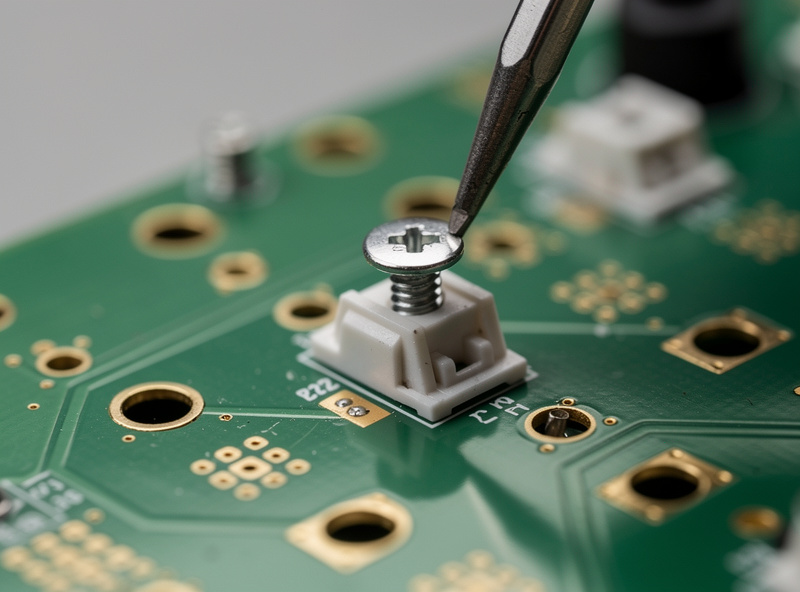
- Screw-in PCB-mount bolts through the PCB with a tiny screw into a threaded insert or a washer-and-nut. Sits dead-flat and rock-solid. Standard on customs.
The comparison that matters
| Property | Plate-mount | Clip-in PCB | Screw-in |
|---|---|---|---|
| Install access | Top, no teardown | PCB removal | PCB removal |
| Baseline stability | Lowest | Medium | Highest |
| Pops loose under load? | Can, if clip worn | Rarely | Never (bolted) |
| Tools to install | None | None | Phillips #00 |
| Typically found on | Budget / prebuilt | Mid-tier | Customs |
| Tuned sound ceiling | Good | Very good | Best |
| Swap difficulty | Easy | Moderate | Moderate |
Why screw-in wins on stability
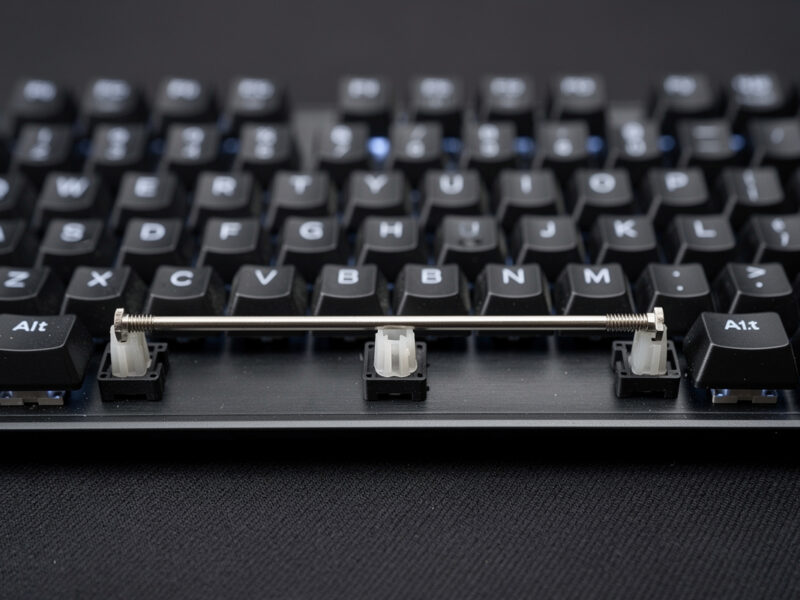
The reason screw-in stabilizers are the enthusiast default is mechanical, not marketing. A plate-mount stabilizer is held by plastic clips engaging plate cutouts, and there’s always a little play in that engagement — the whole stabilizer body can rock microscopically against the plate. A screw-in is bolted flat to the PCB with metal hardware; it can’t rock because it’s clamped. Less play at the mount means less of the housing-rattle noise source before you even start tuning. On my recordings, a stock screw-in starts quieter than a stock plate-mount of similar quality.
Screw-ins also don’t pop loose. A worn plate-mount clip can release under a hard keypress, and suddenly your spacebar is loose and rattling badly. I’ve had it happen on a well-used budget board. A bolted screw-in simply can’t do that.
The catch nobody tells beginners
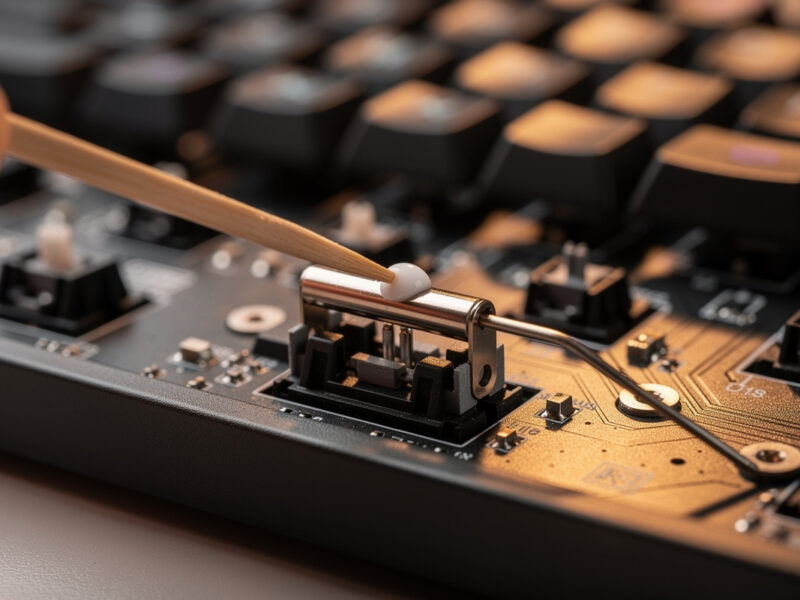
Here’s the honest part: a well-tuned plate-mount stabilizer sounds better than a stock screw-in. The mount sets your starting point and your ceiling, but the tune — greasing the wire, lubing the housing — is what you actually hear day to day. I have a plate-mount board tuned to the point that blind on my recordings I can’t reliably pick it from the screw-in build. So if you have a board with plate-mounts, do not rush to swap them. Tune them first. The rattle fix walkthrough applies identically to all three mount types.
The screw-in advantage is real but smaller than the forums imply, and it’s almost entirely about the baseline and the ceiling, not about whether you can get a great-sounding board. You can get there with any of the three.
Can you upgrade plate-mount to screw-in?
Sometimes. It depends entirely on your PCB: screw-in stabs need the PCB to have the holes for the mounting hardware. Many PCBs are designed for screw-in and ship with plate-mount only to save cost, in which case you can buy screw-in stabs and bolt them right in after a teardown. Other PCBs are plate-mount-only and have no screw holes — there’s nothing to bolt into, so you’re limited to plate or clip-in. Pull a stabilizer and look at the PCB: if you see screw holes flanking the stem positions, you can go screw-in. If not, tune what you have; a tuned plate-mount is genuinely fine.
Which should you buy?
- Building a custom from a barebones kit: screw-in, every time, if the PCB supports it. You’re already doing the teardown, so take the free stability.
- Replacing bad stabs on a prebuilt: match what the PCB supports. If it’s screw-in capable, upgrade; if not, a good clip-in or plate-mount tuned well is the move.
- Your current stabs just rattle: don’t buy anything yet. Tune them first. Most “I need better stabilizers” problems are “I need to grease the wire” problems.
My bottom line
If the PCB supports screw-in and you’re already inside the board, choose screw-in for the better baseline and the never-pops-loose security. But don’t believe the mount is what makes a board sound good — the tune is. I’d rather hand you a tuned plate-mount than an untuned screw-in any day, and my mic agrees.
Frequently asked questions
Are screw-in stabilizers better than plate-mount?
Screw-in stabilizers have a higher stability ceiling and never pop loose because they bolt to the PCB, so they start quieter and stay put. But a well-tuned plate-mount stabilizer sounds better than a stock screw-in. The mount sets the baseline and ceiling; the tune is what you actually hear.
Can I replace plate-mount stabilizers with screw-in?
Only if your PCB has the mounting holes for screw-in hardware. Many PCBs support screw-in and ship plate-mount to cut cost, in which case you can upgrade after a teardown. Some PCBs are plate-mount only with no screw holes, so check by pulling a stabilizer and looking for holes flanking the stem positions.
Do plate-mount stabilizers rattle more than screw-in?
Out of the box, usually yes, because the plastic clips holding a plate-mount stab leave a little play that the bolted screw-in does not have. After tuning, the difference shrinks dramatically. A greased and lubed plate-mount can be hard to distinguish from a screw-in on a controlled recording.
What is a clip-in PCB-mount stabilizer?
A middle option that snaps into the PCB rather than the plate. It is flatter and more stable than plate-mount but still clips rather than bolts, so it can wiggle if the clips are loose. It needs PCB removal to install, like a screw-in, but no screwdriver.
Do screw-in stabilizers need lube too?
Yes. Screw-in mounting only addresses the mount stability. The wire tick and housing friction are separate noise sources that need thick grease on the wire and thin lube in the housing, exactly the same as any other stabilizer. No mount type ships properly tuned.
Will plate-mount stabilizers pop loose?
They can, if a clip is worn or the fit is loose, especially on a heavily used key like the spacebar. When a clip releases under a keypress the stabilizer goes loose and rattles badly. Screw-in stabilizers are bolted and cannot pop loose, which is one of their genuine advantages.
Should a beginner buy screw-in stabilizers?
If you are building a custom from a barebones kit and the PCB supports screw-in, yes, because you are already doing the teardown and the stability is free. If your existing board just rattles, do not buy anything yet. Tune the stabs you have first; most rattle is an untuned wire, not a bad mount.