This information is for educational purposes. Keyboard work involves small parts, soldering irons, and electronics — work in a ventilated space when soldering, unplug boards before opening them, and modding a board may void its warranty. When in doubt, check the manufacturer's documentation first.
The band-aid mod is one of the oldest tricks in keyboard building, and every couple of years someone declares it dead. So is it still relevant in 2026, or has PCB foam made it obsolete? After doing it on most of the boards in my drawer and recording the before-and-after on the same mic at the same distance, my answer is nuanced: the band-aid mod is still genuinely useful on a specific class of board, and pointless on another. Here’s how to tell which one you have.
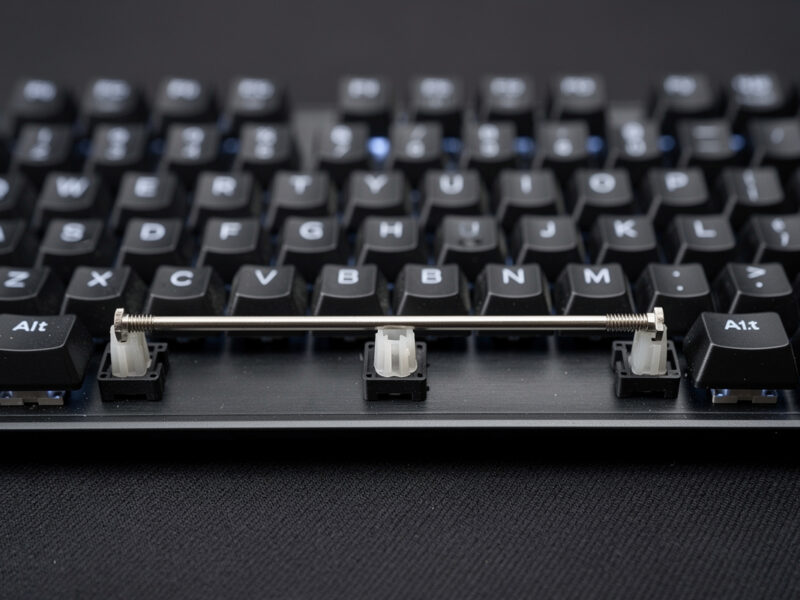
If you’re working through a full tune, this fits into the sequence after greasing the wire and lubing the housing — the broader order lives in the stabilizer tuning guide, and the hands-on grease steps are in the rattle fix walkthrough.
What the band-aid mod does
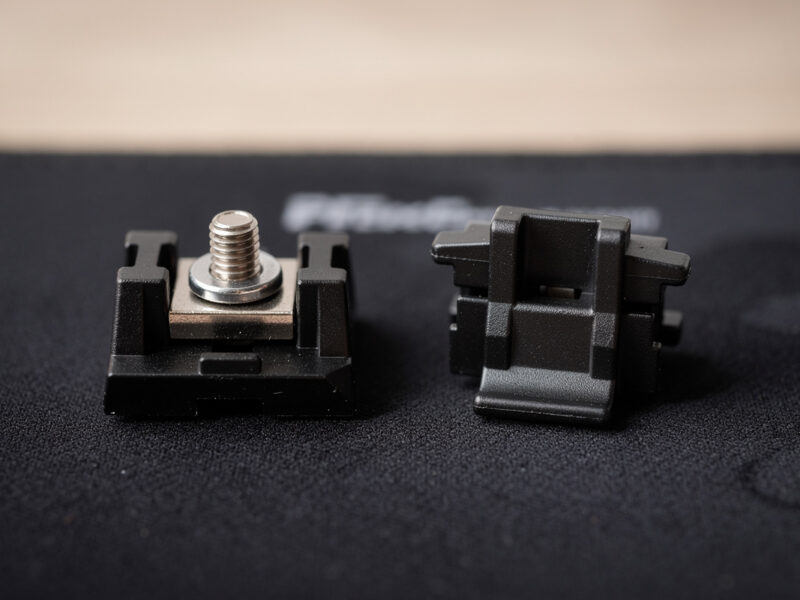
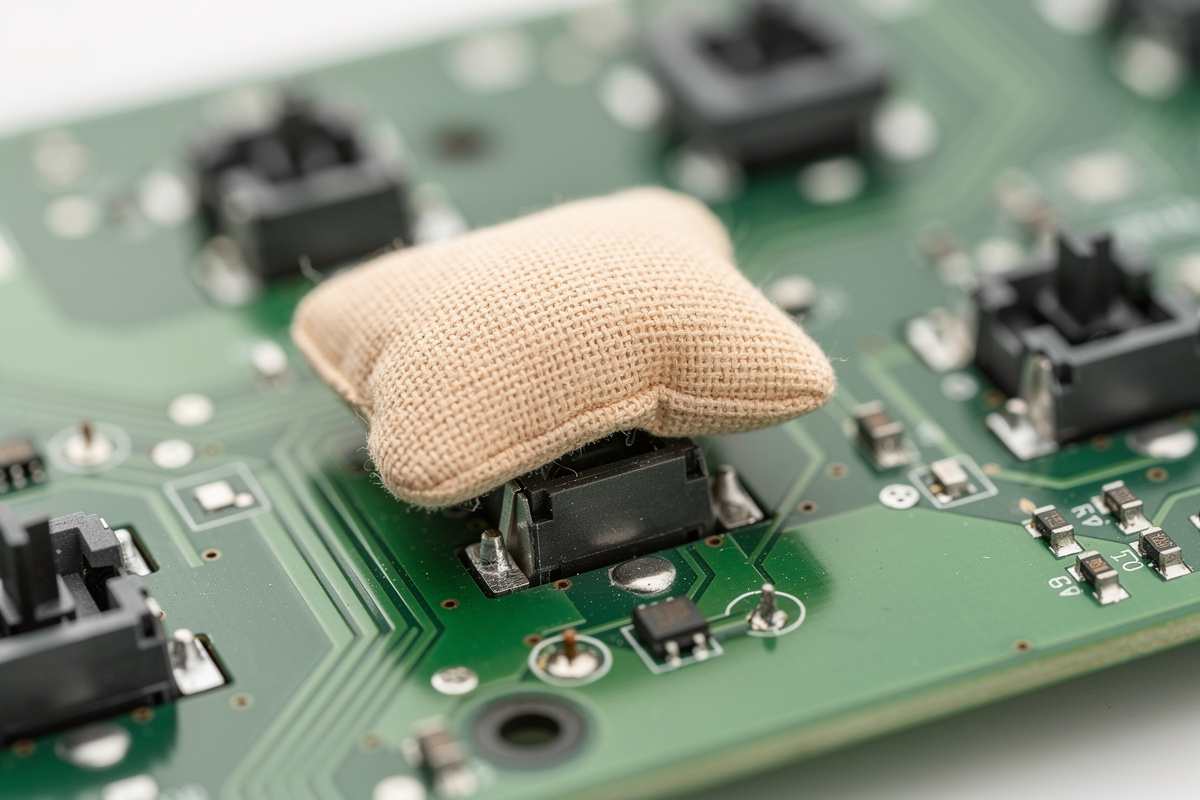
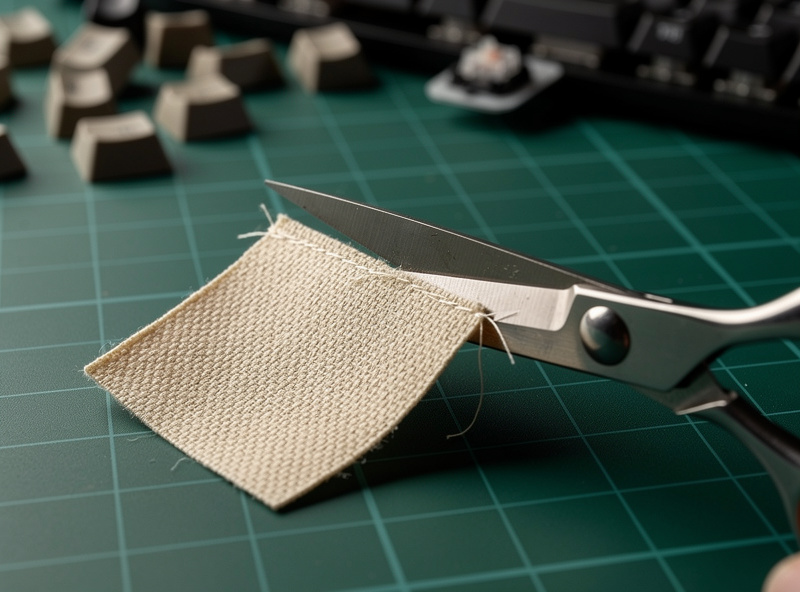
When you bottom out a stabilized key, the bottom of the stabilizer stem slaps down against whatever is beneath it — usually the bare PCB. That impact is a sharp, high-pitched component of the “rattle” you hear, separate from the wire tick. The band-aid mod puts a small cushion — a folded scrap of fabric bandage — on the PCB directly under each stem’s landing point, so the stem lands on padding instead of hard fiberglass. The slap becomes a muted thock.
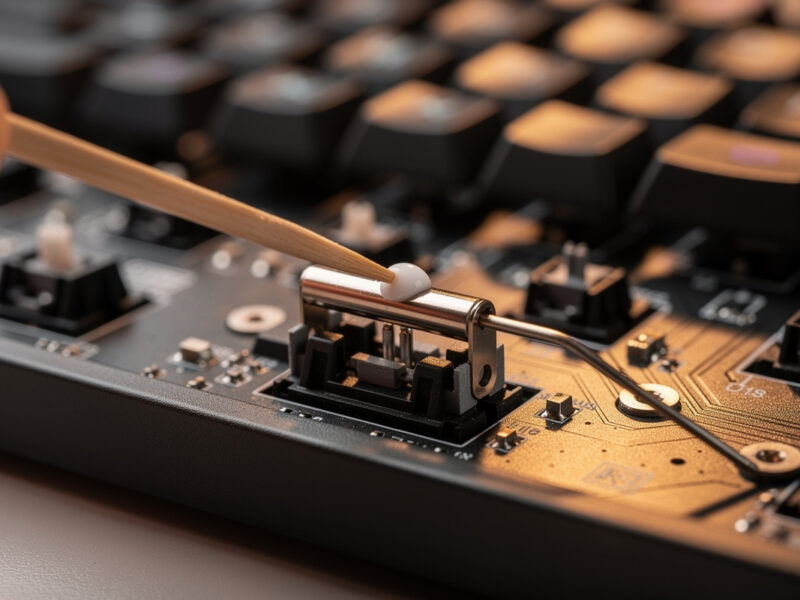
Note the key distinction from the Holee mod, which people constantly confuse it with: the Holee mod cushions the wire inside the stem channel to kill tick; the band-aid mod cushions the stem foot against the PCB to kill bottom-out slap. Different noise, different location, different fix. You can do both, and on a noisy budget board I often do.
Why PCB foam changed the conversation
Here’s the part most “is it still relevant” debates miss. Many modern boards ship with a sheet of PCB foam — a layer of foam between the PCB and the plate or case. That foam already sits under the stabilizer stems, so the stem foot lands on foam, not bare PCB. On a board with good PCB foam, the band-aid mod is largely redundant: the foam is already doing the band-aid’s job across the whole board. Adding a bandage on top changes little, and on my recordings the delta is barely audible.
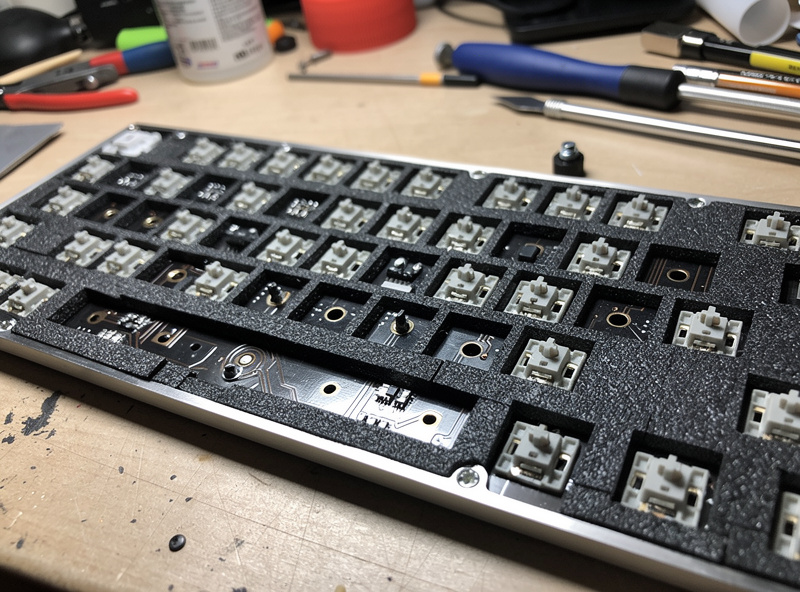
So the single question that decides relevance is: does your board have PCB foam under the stabilizers? Pop a stabilized switch and look. If there’s a foam layer between the PCB and plate, skip the band-aid mod — it’s already handled. If the stem foot lands on bare PCB, the band-aid mod is still very much worth doing, and it’s the cheapest improvement you can make.
When the band-aid mod is still worth it
- Budget boards with no PCB foam. This is the band-aid mod’s home turf. My stock budget 60% has bare PCB under the stabs, and the mod noticeably deepens the spacebar bottom-out.
- Boards where you removed the foam. Some builders pull PCB foam because they prefer a more open sound; if you’ve done that, the band-aid mod brings back just the stabilizer-area damping without re-muting the whole board.
- Targeted spacebar fix. Even on a foamed board, if the spacebar specifically still slaps, a band-aid under just the spacebar stems can take the edge off.
When to skip it
- You have full PCB foam. Redundant. Spend the time greasing the wire instead.
- You’re chasing a clackier sound on purpose. The band-aid mod muffles; if you like a sharper bottom-out, it works against you.
- The noise is wire tick, not slap. The band-aid does nothing for tick or ring — that’s a wire-grease or Holee-mod problem. Diagnose first.
- Fabric bandages (the cushion material)
- PCB foam sheet (the modern alternative)
- Switch and keycap puller set
How to do the band-aid mod
It’s genuinely simple — this is one of the few stabilizer mods I’d hand to a complete beginner:
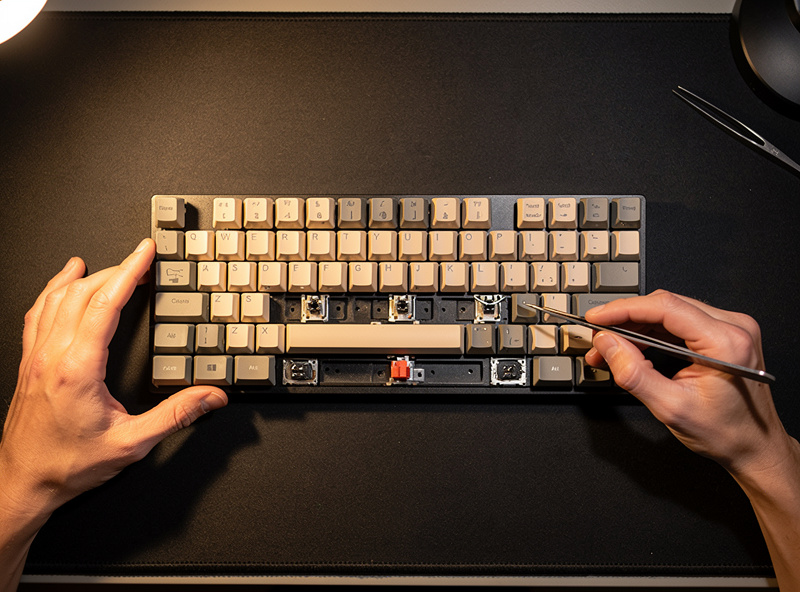
- Remove the keycap and switch above each stabilizer to expose the stem positions on the PCB.
- Cut a small square of fabric bandage — just the woven pad part, not the adhesive ends — sized to cover where the stem foot lands.
- Stick it to the PCB directly under each stem’s landing point. The adhesive backing holds it; some people use a second piece for a touch more cushion.
- Reinstall switches and keycaps, and test. The bottom-out should sound deeper and softer.
You can do it with the stabilizers still mounted, which is what makes it so accessible — no full teardown, no desoldering, nothing irreversible. If you peel the bandage off later, the PCB is unharmed.
The thickness question nobody mentions
One subtlety that trips people up: how thick to make the cushion. Too thin and it does nothing; too thick and it changes the key’s travel, because now the stem foot is hitting the bandage before the switch fully bottoms out, leaving the stabilized key feeling higher or mushier than the keys around it. On a wide key like the spacebar, an over-thick band-aid makes the bar feel like it floats. I aim for the thinnest cushion that audibly softens the slap — usually a single layer of the woven pad. If you can feel the stabilized key bottoming out before the surrounding keys, your pad is too thick; peel a layer. This is exactly why PCB foam, which is engineered to a consistent thickness, has largely supplanted the hand-cut bandage: it cushions without throwing off the travel. The band-aid mod survives because it’s free and targeted, but respect the thickness or you’ll trade a tick for a mush.
Stacking it with the rest of the tune
The band-aid mod is the last step in my sequence, not the first. Grease the wire (kills tick), lube the housing (kills friction), then band-aid the feet (kills slap) — in that order, stopping when the noise is gone. On a bare-PCB budget board I do all three and the spacebar goes from embarrassing to genuinely satisfying. On a foamed board I usually stop after the wire grease because the foam already did the band-aid’s job. The mod isn’t dead; it’s just been partly automated by foam, and knowing whether your board has that foam is the whole decision.
Frequently asked questions
Is the band-aid mod still relevant in 2026?
Yes, on boards without PCB foam under the stabilizers. The band-aid mod cushions the stem foot against the bare PCB to soften the bottom-out slap. On boards that ship with PCB foam, the foam already does this job, so the mod is largely redundant. Check whether your board has foam under the stabs to decide.
What is the difference between the band-aid mod and the Holee mod?
The band-aid mod cushions the stabilizer stem foot against the PCB to kill bottom-out slap. The Holee mod cushions the metal wire inside the stem channel to kill tick. They address different noises in different locations, and you can do both on a noisy board.
Does the band-aid mod work if my board has PCB foam?
Usually not in a way you can hear. PCB foam already sits under the stabilizer feet and does the same cushioning job across the whole board. Adding a bandage on top changes little. If the spacebar specifically still slaps, a band-aid under just those stems can help.
Can I do the band-aid mod without removing the PCB?
Yes. You only need to remove the keycaps and switches above each stabilizer to reach the stem landing points on the PCB. The bandage sticks to the exposed PCB. It is one of the most beginner-friendly stabilizer mods because nothing is irreversible.
What can I use instead of a band-aid for the mod?
A sheet of PCB foam is the modern alternative and damps the whole board, not just the stabilizers. Some builders use small pieces of thin foam tape. The original woven fabric bandage works because it is thin, slightly cushioned, and self-adhesive.