This information is for educational purposes. Keyboard work involves small parts, soldering irons, and electronics — work in a ventilated space when soldering, unplug boards before opening them, and modding a board may void its warranty. When in doubt, check the manufacturer's documentation first.
A keyboard sounds deep and thocky when the build removes high-frequency resonance and lets the bottom-out land soft and full. The recipe is mostly subtractive: dampen the hollow case ring, choose softer materials, and tune the stabilizers. The switch you pick is the smallest ingredient — the case and what is inside it do the heavy lifting.
Thock is the sound people chase hardest and misunderstand most. They buy a fourth set of “thocky switches” and wonder why their board still pings, when the deep sound they want was always going to come from the case, the foam, and the plate. I have built that deep sound on purpose and recorded the before and after every time, so here is the honest recipe — ingredient by ingredient, in the order that actually matters.
The Physics of “Thock” in One Paragraph
Every keypress sends energy into the board. A bright, clacky sound is that energy ringing freely as high frequencies — an empty case resonating like a drum. A deep, thocky sound is that same energy with the high frequencies absorbed and the resonance damped, leaving the lower-pitched body of the impact. So “making a board thocky” is really “removing the ring.” Once you internalise that, every mod makes sense: you are not adding thock, you are taking away clack. The full map of how the layers interact lives in the keyboard sound guide, and the bright-versus-deep framing is laid out in clacky vs thocky explained.
Ingredient 1: The Case Is the Instrument
The case material sets the ceiling for how deep a board can sound. A dense case with mass and internal dampening produces a lower, fuller note; a thin, hollow case rings bright no matter what switches you load. This is why the same switches in two of my boards — a hollow budget 60% and a foamed aluminum build — sound like completely different instruments. If your board is fundamentally hollow, you fix it from the inside with foam before you touch anything else. No switch swap will out-run a ringing case.
You cannot easily change a case you already own, but you can fill it. That is the single highest-impact move available to most builders, and it costs a few dollars.
Ingredient 2: Foam, Used Like a Scalpel
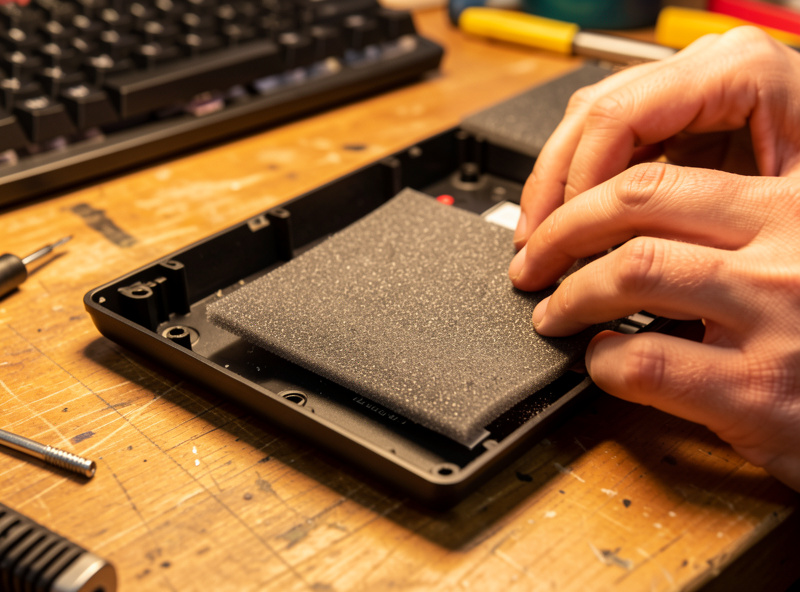
Foam is how most people add depth, and how most people ruin it. Case foam under the PCB kills the hollow ring. Plate foam between the plate and PCB tightens the sound and deepens it by soaking up the higher frequencies. PE foam laid over the switch pins is the one that produces the poppy, marbly version of thock that gets clipped and shared. Each layer does a specific job, and stacking all of them at maximum thickness gives you a dead, lifeless thud — quiet, but with no character left.
The discipline is to add one layer, listen, and stop the moment the board sounds full instead of hollow. I break down where each layer goes and what it changes in the foam layers guide, and the cheapest place to start is the PE foam mod. Over-foaming is the most common reason a “thock build” ends up sounding flat.
Ingredient 3: A Softer Plate
The plate sets a lot of the sound’s hardness. A stiff brass plate rings bright and loud; a softer plate rounds the impact off and deepens it. FR4, POM, and polycarbonate plates are the usual picks for a deeper signature, with polycarbonate being the classic “thock” plate because it flexes and absorbs rather than ringing. If you run a hotswap board you can open, a plate swap is one of the most effective ways to re-flavor toward deep without buying a new board. The trade-offs of each material — feel as well as sound — are in the plate material comparison.
Ingredient 4: Mounting That Lets the Plate Move
How the plate is held changes how the impact resolves. A rigid tray mount transmits a firmer, sometimes sharper sound; a gasket mount suspends the plate so it flexes slightly and cushions the bottom-out into something deeper and softer. Silicone gaskets in particular have a characteristic cushioned signature that I covered on its own in silicone gasket mount sound explained. Mounting is baked into the board at purchase, so if a deep, soft sound is your goal, weigh it when you buy rather than hoping to mod it in later.
Ingredient 5: Thick PBT Keycaps
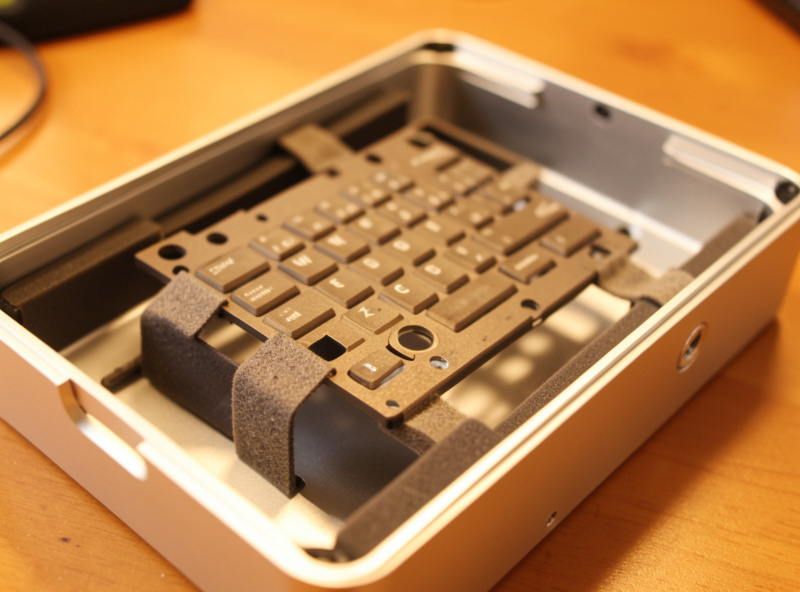
The keycap is the last surface the sound passes through, and thick PBT caps add body and mute the top-end in a way thin ABS does not. Wall thickness matters as much as material — a thicker cap produces a fuller, lower note. It is a smaller effect than the case or foam, but it is the easiest one to swap on preference, and it is the layer you are looking at all day anyway. The material question gets a full daily-use breakdown in the PBT vs ABS comparison.
The Mistake That Kills More Thock Than Anything
Untuned stabilizers. You can nail every ingredient above and a single rattling spacebar will be the only thing your ears register. Stabilizer tuning is free, it is the highest-ROI fix in the hobby, and it has to come first — there is no point chasing a deep sound on a board that ticks. Start with the stabilizer tuning guide, get everything silent and clean, and then layer the depth on top. Deep sound on a rattly board is just rattle with bass.
A Worked Example: Taking a Hollow Board Deep
Here is how the recipe plays out in practice on a typical hollow hotswap board. Start by typing it stock and noting the problem: a bright, ringing, slightly hollow sound with maybe a rattly spacebar. Step one is the stabilizers — tune them until the spacebar and big keys are silent and clean, because no amount of depth survives a rattle. Step two is case foam, dropped into the empty bottom of the case to kill the ring; type it again and the hollowness is already mostly gone and the board sounds fuller.
Step three, if you want the poppy character, is a sheet of PE foam over the switch pins — type again and listen for that marbly pop appearing. Only now, step four, do you consider the plate and keycaps: if it is still too bright, a softer plate or thicker PBT caps push it deeper. The order matters because each step changes what the next one is working with, and because stopping early is often right — many boards sound great after just stabilizers and case foam. This is the same staged approach I apply on the bench, listening between every change rather than doing everything at once and hoping. If you do everything in one go and it sounds wrong, you have no idea which step to undo. Pair this with the right starting plate from the plate material comparison and the foam detail in the foam layers guide.
A note on perspective, because thock has become a trend as much as a sound: do not chase it past the point where you actually enjoy your board. Some of the deepest, most “correct” thocky builds are, to a lot of people, a little boring to type on — all body and no life. The goal is a board you like the sound of during a real work session, not a board that wins a sound test. I have built dead-deep boards and quietly gone back to something livelier, and that is a fine outcome. Use the recipe to get the sound you want, then stop. The point of tuning is your enjoyment, not a number on the thock scale or anyone else’s approval.
Frequently Asked Questions
What actually makes a keyboard sound thocky?
A thocky sound comes from removing high-frequency resonance: case foam to kill the hollow ring, a softer plate like polycarbonate, PE foam over the switch pins, thick PBT keycaps, and tuned stabilizers. The case and foam matter far more than which switch you choose.
Are there switches that make a keyboard thocky?
Switches only nudge the sound. The same switch sounds bright in a hollow case and deep in a foamed, soft-plated one. Lubed standard-pole linears help, but depth comes from the build around the switch, not from a switch marketed as thocky.
Does adding more foam make a keyboard more thocky?
Only up to a point. Foam removes resonance, so the first layers deepen the sound, but too much foam deadens the board into a flat, lifeless thud. Add one layer at a time, listen, and stop when it sounds full instead of hollow.
What plate gives the deepest keyboard sound?
Polycarbonate is the classic deep plate because it flexes and absorbs rather than ringing. FR4 and POM are also softer, rounder options. Stiff brass plates ring brightest, so for a thocky board choose a softer plate material.
Why does my keyboard still sound shallow after modding?
Usually untuned stabilizers or an over-foamed, deadened board. Tune the stabilizers first so nothing rattles, then check you have not stuffed so much foam that the board lost all life. Shallow often means rattly, not under-modded.